Japan is now home to many long-distance trails.
There’s the coastal Michinoku Coastal Trail in Tohoku, and the historic Kyoto Trail circling the ancient capital.
Each has its own character. Among all these choices, why did I choose the Volcano Trail?
The answer is simple: The first time I saw a photo of it, and it hit me.
“I had no idea such a landscape existed in Japan!”
I’ve been mountaineering for over 20 years, conquered countless winter peaks, and trekked overseas. Yet, I truly didn’t know scenery like this existed in Japan.
While volcanoes are popular tourist spots, they are rarely discussed as long-distance trekking traverses. It wasn’t on my radar—until now.
Now that these points have been connected into a single trail, it is finally getting the attention it deserves.
The reality far exceeded my expectations. It was a journey of breathtaking views combined with the deep-rooted Japanese culture of Onsen (hot springs).
Contents.
1.Overview & Highlights
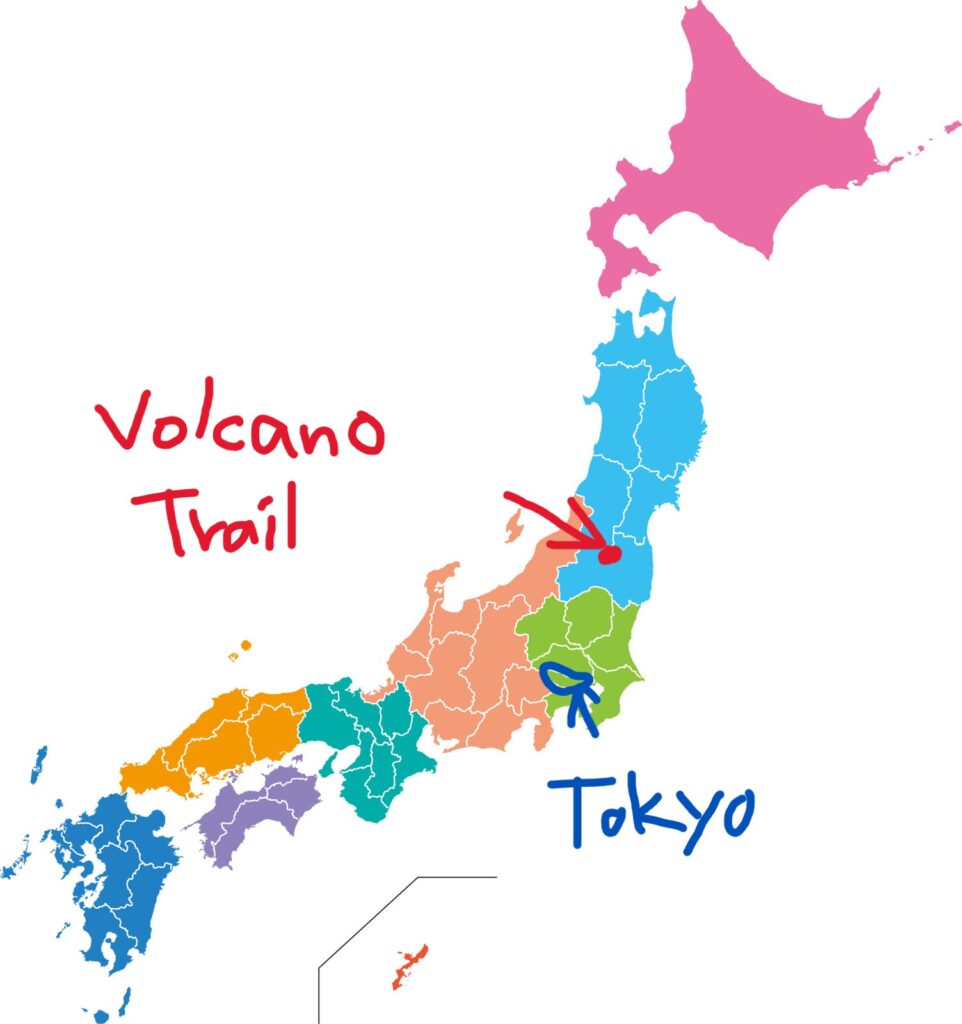
The Volcano Trail connects the three iconic volcanic peaks of Fukushima Prefecture in Northern Japan: Bandai, Azuma, and Adatara.
As of 2026, the 72km section known as the ATA (Azuma to Adatara) Route has been officially established.
Highlights
1. A Trek Through Living Volcanoes
As the name suggests, you are walking through active volcanic landscapes.
From the approachable and “cute”Mt. Azuma-Kofuji to the epic, divine crater of Numanotaira, each volcano has a distinct personality.
What they share is a beauty so profound it inspires awe. Standing there, I truly understood why volcanoes have been objects of worship in Japan since ancient times.

You’ll also encounter diverse nature: the jewel-like Goshikinuma ponds and the Jododaira wetlands. Every step feels like you’ve entered a different world.
2. Onsen × Mountain Culture
Volcanic activity and Onsen go hand-in-hand.
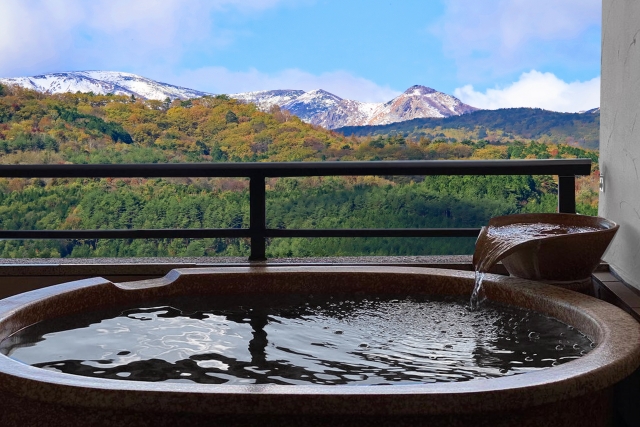
This trail is blessed with hot springs at the start, along the way, and at the finish line.
This means you can use Onsen ryokans (inns) as your “base camps.”
Soothing your muscles in natural hot water at the end of the day and sipping local sake is a luxury you won’t find on a standard tent-only trek. This is the true Japanese way to enjoy a long trail.
3. Highly Customizable & Accessible
Not everyone has weeks to spare. This trail is perfect for those with limited time because it descends near villages between major areas.
You can customize your itinerary based on your fitness level—do a quick day trip, or stay a few days at a hot spring inn to soak it all in. Despite being in the deep mountains of Fukushima, the flexibility is incredible.
Plus, accessibility is a game-changer: it’s only about 2 hours from Tokyo via Shinkansen and bus. You can leave Tokyo in the morning and be on the trail before noon.
2.Trail Areas
• Azuma Area (Volcanoes & Bonsai):
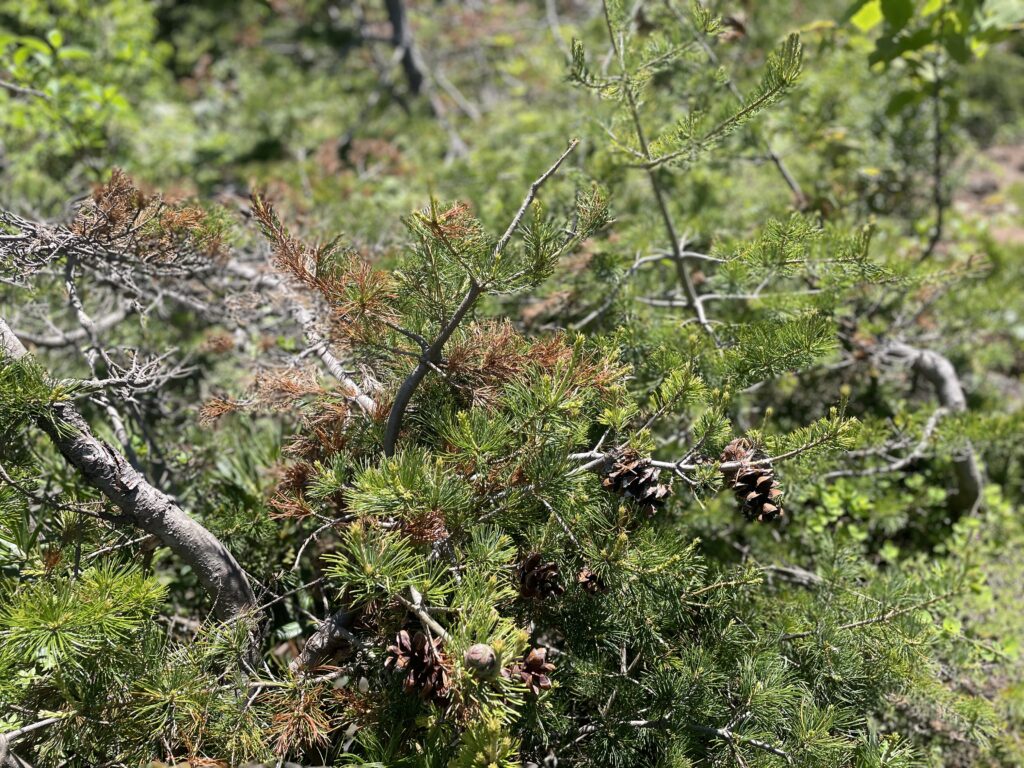
Often overshadowed by the more famous Bandai and Adatara, Azuma has its own quiet magic: volcanic terrain, crater lakes, and wetlands shaped by volcano.
In winter, heavy snow blankets the range. The harsh climate has shaped a rare species of pine known as Azuma Goyomatsu, prized in the bonsai world. There’s even a saying:
“the model for all bonsai is found in Mt. Azuma.”
For this reason, the Volcano Trail is sometimes nicknamed the “Bonsai Trail.”
(Bonsai is the Japanese art of growing and shaping miniature trees in containers to reflect the beauty of nature.)
• Adatara Area (Divine Volcanic Majesty):
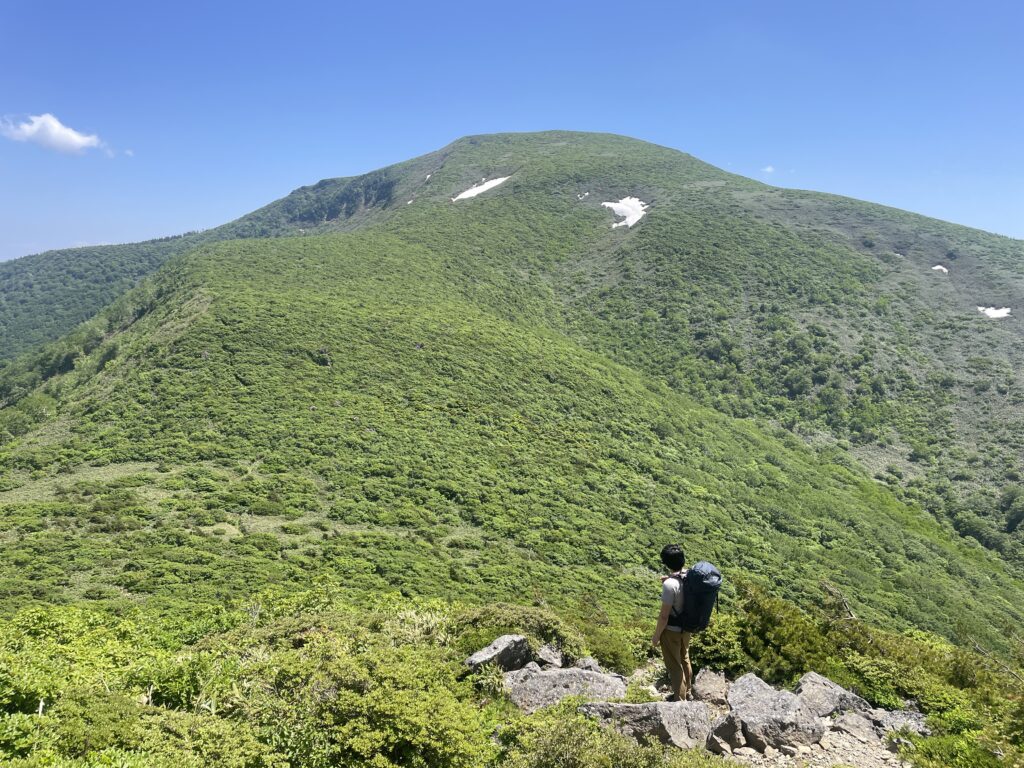
A favorite for Japanese hikers, especially for its autumn colors. Once you stand on its slopes and see the vast volcanic crater landscape, you understand why it’s so beloved.
The scale of this active volcano feels almost god-like. Personally, I consider this the highlight of the entire trail.
Beyond the main peak, the “sea of green” stretching across Mt. Minowa and Mt. Kimen makes you feel like you’ve traveled very far from civilization.
3.Must-See Views
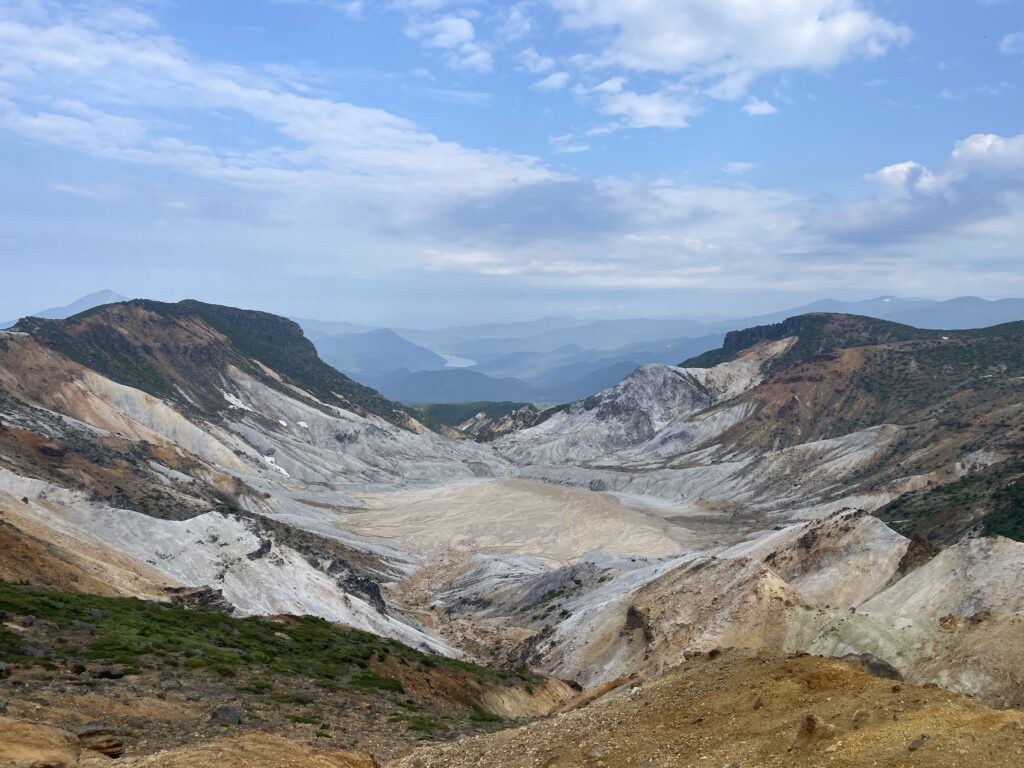
・Numanotaira Crater:
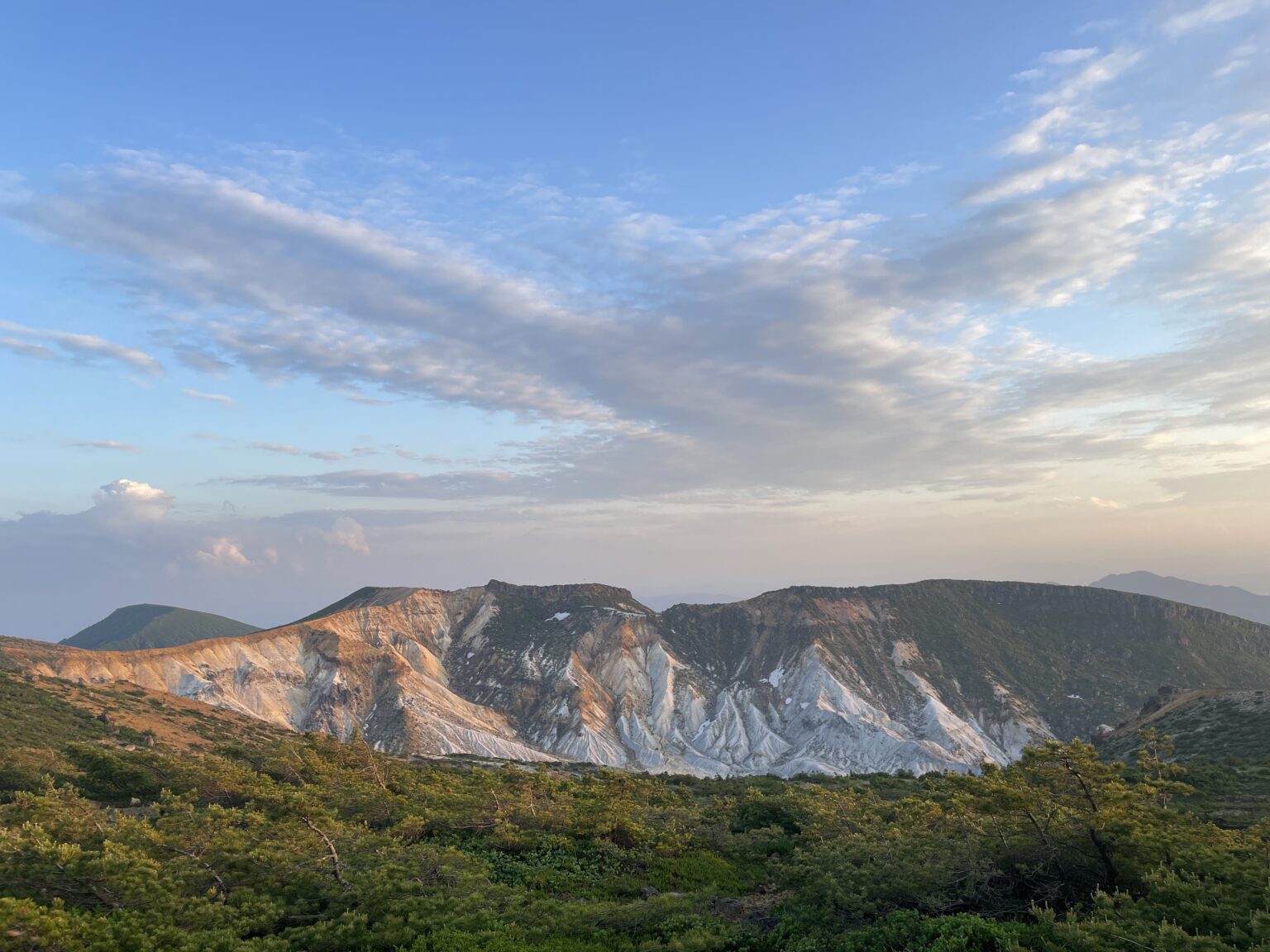
The most memorable spot for me. The white slopes and sharp shadows make the entire mountain look like a sculpture.
The view from the Tetsuzan Hut is like a traditional Japanese folding screen painting. It’s worth coming to Fukushima for this view alone.
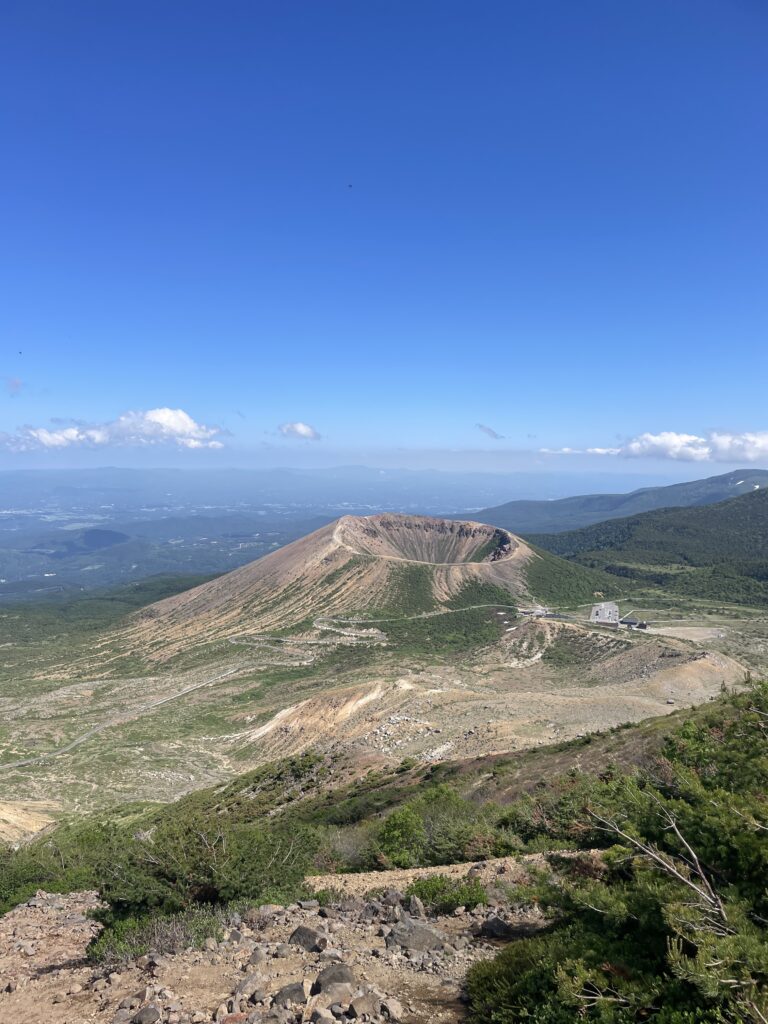
・Mt. Azuma-Kofuji:
Because of its easy access, many tourists walk around its crater.
But my recommendation? Don’t just climb it—view it from afar.
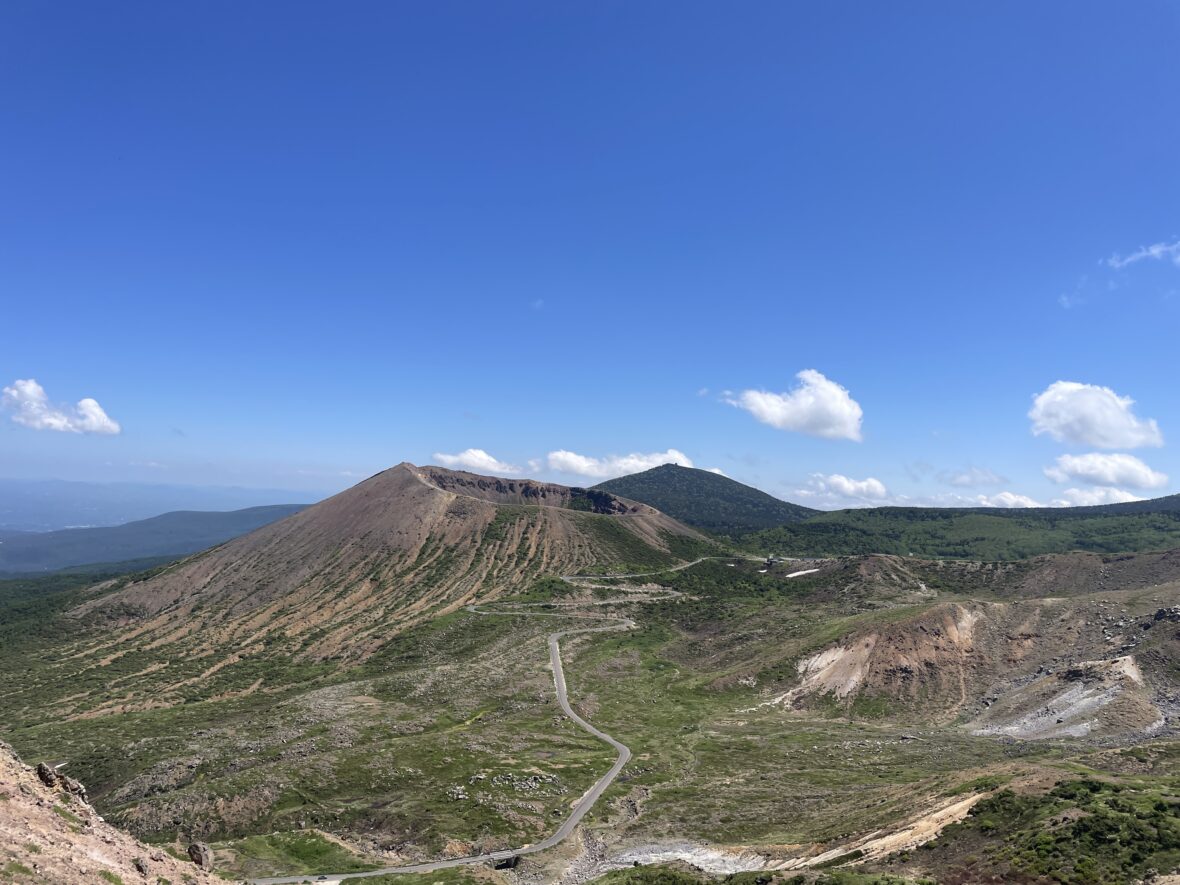
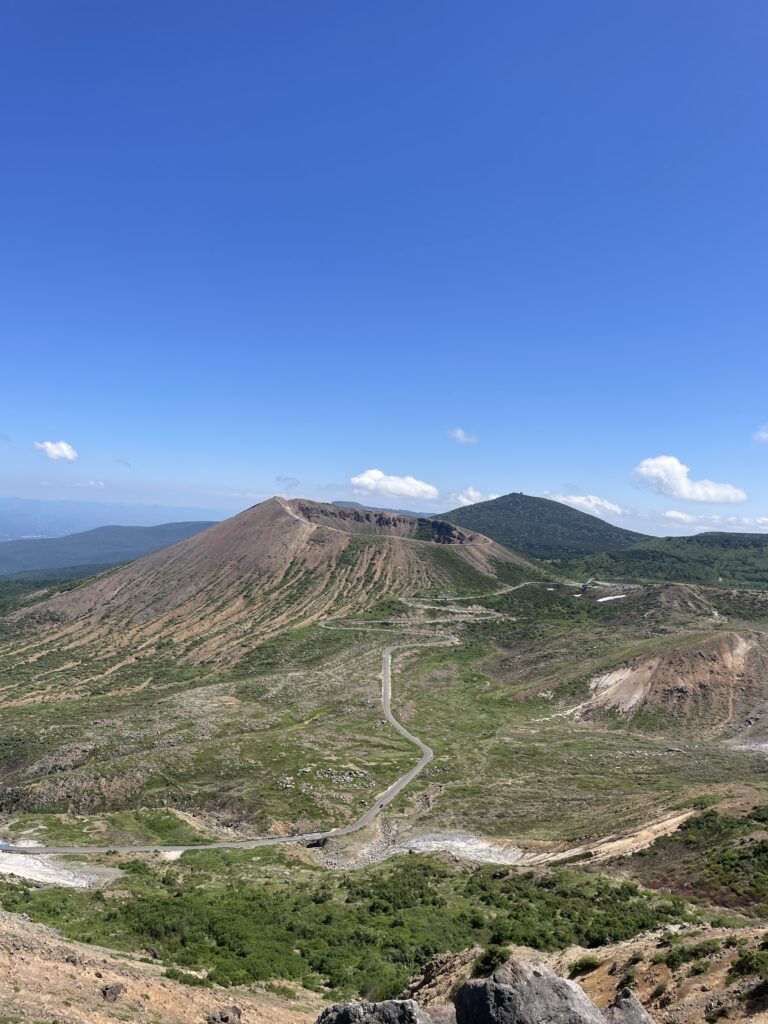
From Rakuda-yama, Azuma-Kofuji’s symmetrical slopes are strikingly beautiful. The straight line of the Bandai-Azuma Skyline road adds a sharp visual accent to the scene.
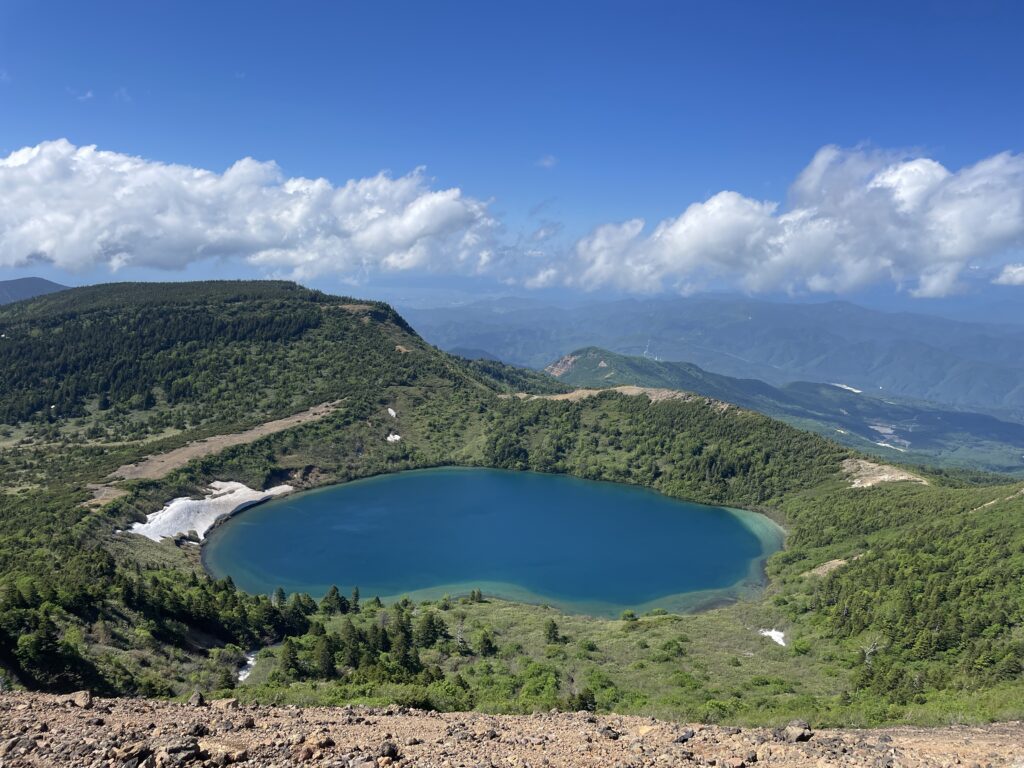
・Goshikinuma (The Witch’s Eye):
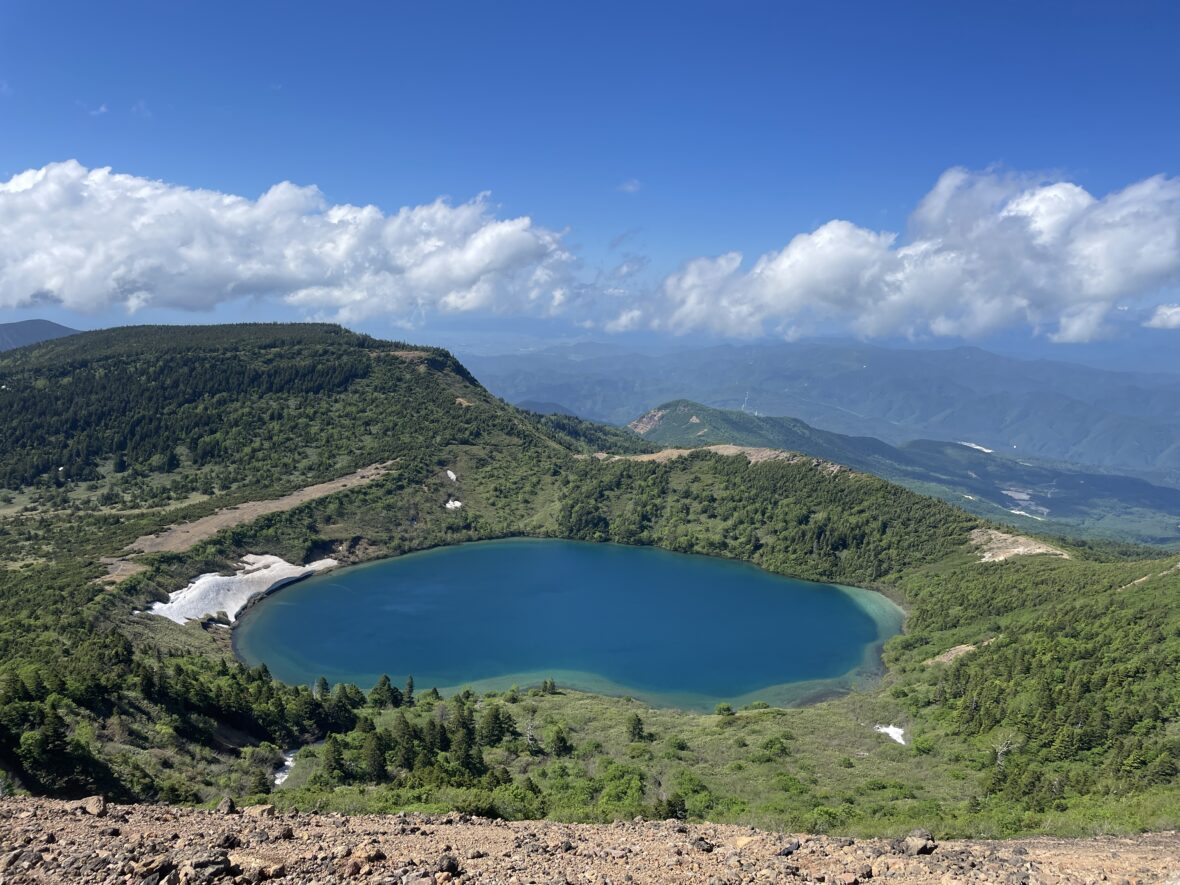
From the summit of Issaikyozan, a turquoise crater lake suddenly appears below. Nicknamed “The Witch’s Eye,” it feels almost unreal.
You cannot see it until you reach the summit—so when it appears, it’s genuinely surprising.
The water shines like a jewel. Even people who rarely take photos will want to capture this moment.
4.Who is this for?
• Hikers wanting to explore diverse volcanic landscapes.
• Those curious about experiencing Japan’s onsen culture.
• Hikers looking for a trail with easy “escape routes” or section-hiking options.
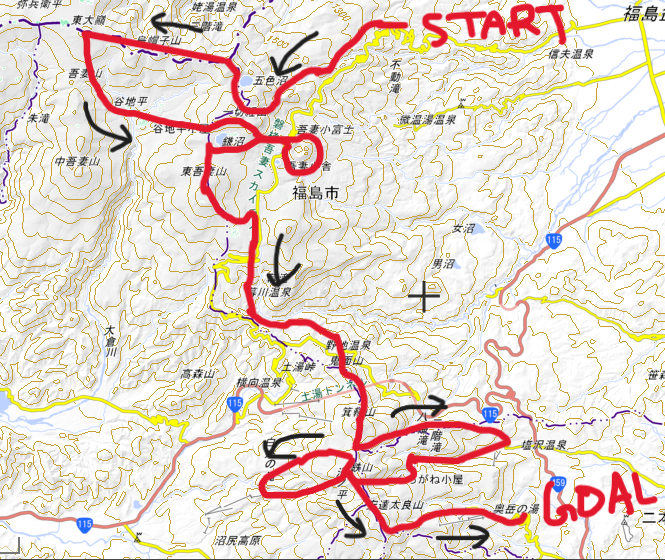
5.Duration
• Official Guide: 4 Days / 3 Nights
• My Experience: 3 Days / 2 Nights
We skipped a small portion and found 3 days to be plenty of time. If you are a fit hiker, 3 days is very doable for the full route.
(Details on itinerary planning will be covered in the next article.)
6.Best Season
Spring and autumn are ideal.
Autumn is especially beautiful in Adatara, famous for its fall foliage.
Summer can be hot and humid, with tall vegetation blocking airflow and plenty of insects.
Winter is a heavy snow zone suited only for extreme mountaineering, not casual long-trailing.
7.map


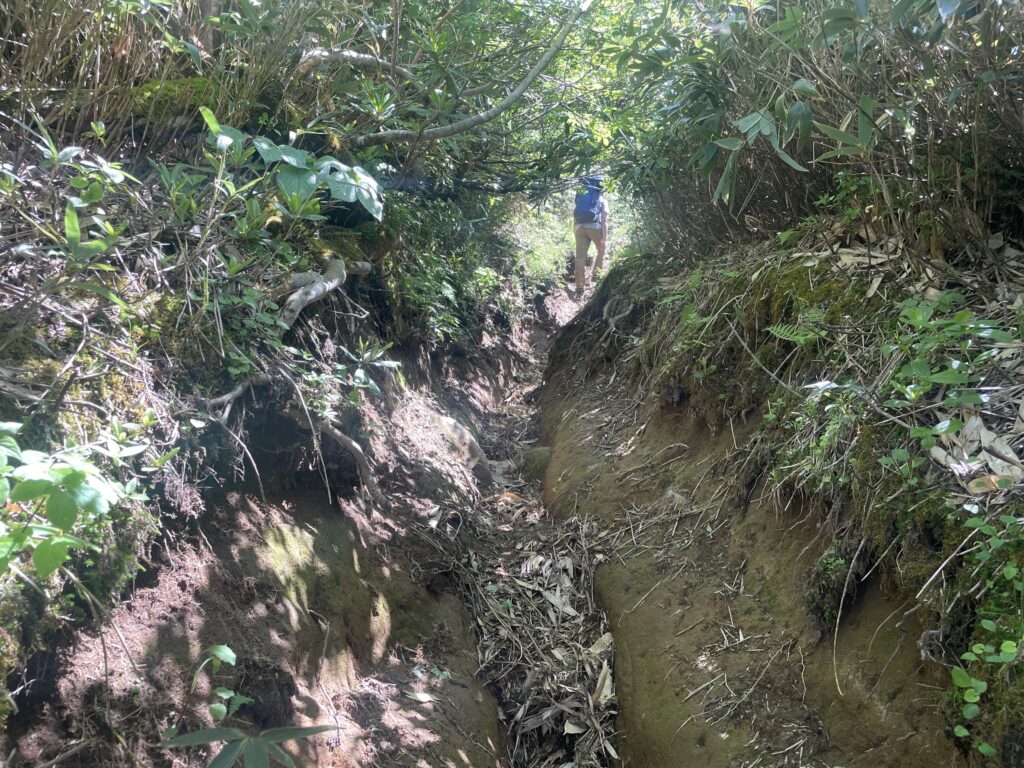
The map below was used as a reference for this hike. this is the most detailed hiking map covering the Bandai, Azuma and Adatara volcanic area. Essential for route planning.
Next, I’ll share a detailed 2-night/3-day itinerary, section-by-section difficulty, and access information.
If you’re interested in more mountain adventures in Japan, check out my other hiking articles below.