“I want to try outdoor climbing in Japan, but I don’t know where to go.”
“I’d love to climb outside, but I’m not comfortable driving in Japan.”
If that sounds like you, this guide is for you.
I’ll be introducing some of the best outdoor climbing areas near Tokyo that are easily accessible via train and bus. There are many great spots to choose from, but I’ve carefully selected a few favorites, categorized by climbing level.
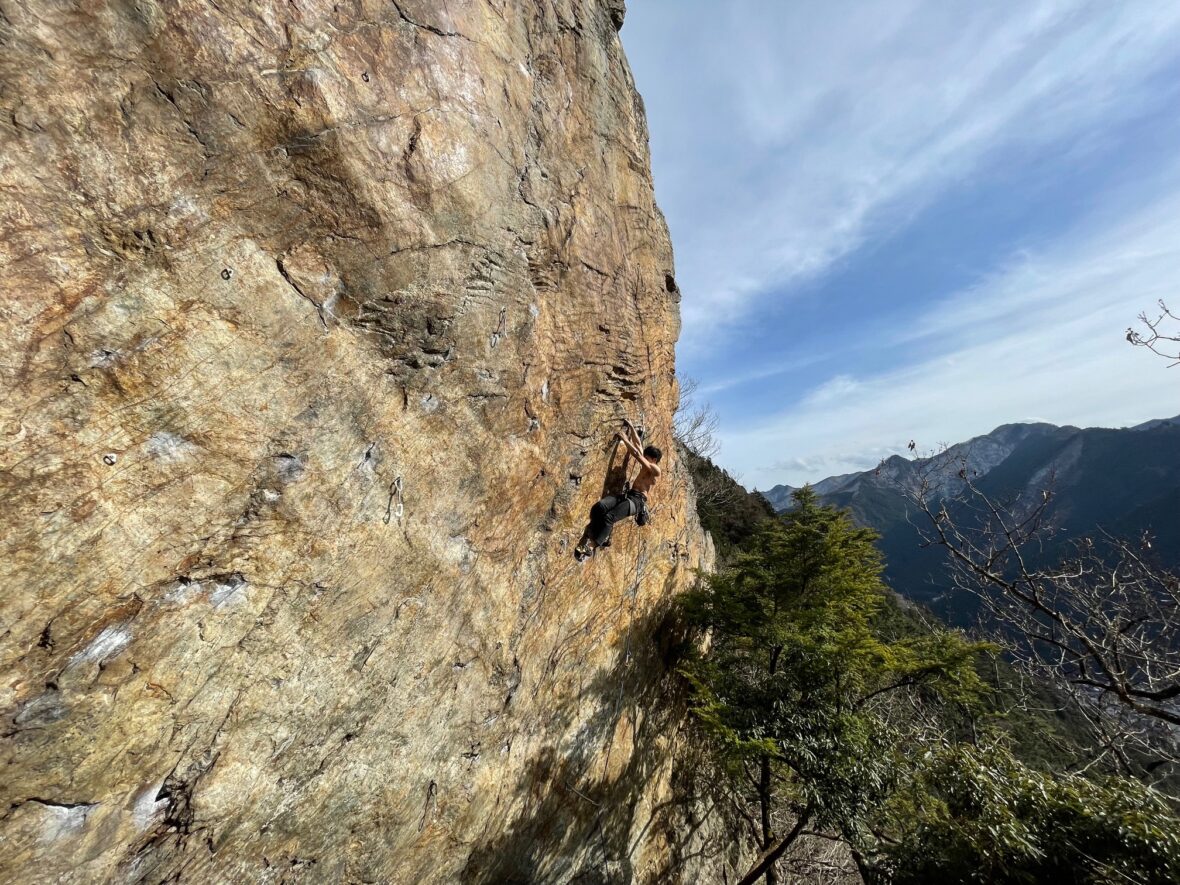
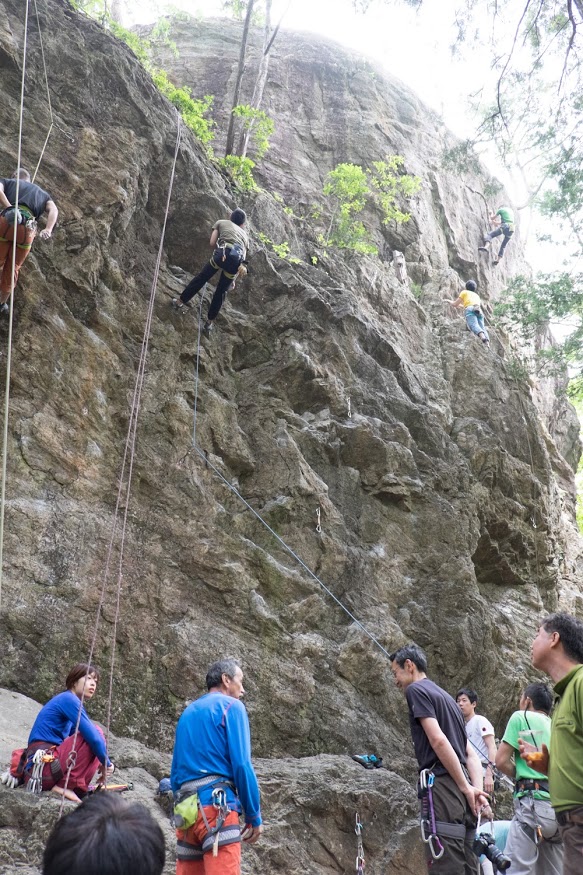
For 6a-6b (5.10–5.11) Climbers: Tenno-iwa (天王岩)
Location: Near Musashi-Itsukaichi Station + bus to Sorigo-bashi(17 min)
Approach : 5 minutes walk from the bus stop
Rock Type: Chert
Number of Routes: 46 (mostly 5c–6b / 5.9–5.11)
Best Season: Spring & Autumn (March–May, September–November)
Recommended Routes: Crack Joy (5c (5.9)), Hachigatsu Kakumei (August Revolution ) (6c-6c+ (5.11b))
Train Access from Shinjuku
1.JR Chuo Line → Tachikawa Station
2.Transfer to JR Ome Line → Haijima Station
3.Transfer to JR Itsukaichi Line → Musashi-Itsukaichi Station
4.Bus → Sorigo-bashi Bus (Bus timetable is here)
Travel time: ~2 hours (All accessible with Suica/Pasmo)
Overview
A very popular spot for beginners, offering many 5c to 6a (5.9 to 5.10) grade routes. It’s often considered the “first outdoor crag” for lead climbers living in Tokyo.
The crag is divided into upper and lower sectors. The lower sector often suffers from seepage and can be wet, while many of the classic routes are located in the upper sector, which tends to be more enjoyable.
The upper sector is spacious and comfortable, and the crag is frequently used for guided lead climbing courses. It can get quite cold in winter.
Fun fact : There used to be a crematorium nearby, which is why many of the route names are inspired by the afterlife.
For 6b+-7a+ (5.11–5.12) Climbers : Kawamata (河又)
Location: Near Hanno Station+ bus to Kawamata Naguriko Iriguchi (40 min)
Approach : 20–30 minutes walk from the bus stop
Rock Type: Limestone
Number of Routes: 106 (mostly 5c–6b+ / 5.9–5.11)
Best Season: Autumn to Spring (roughly September through May)
Recommended Routes: Miyazaki Midori (6a–6a+ (5.10a)), Ichigo Ichie (7c–7c+ (12d))
Train Access from Shinjuku
1.JR Yamanote Line → Ikebukuro
2.Transfer to Ikebukuro Line →Hanno station
3.Bus → Kawamata Naguriko Iriguchi (Bus timetable is here)
Travel time: ~2 hours (All accessible with Suica/Pasmo)
Overview
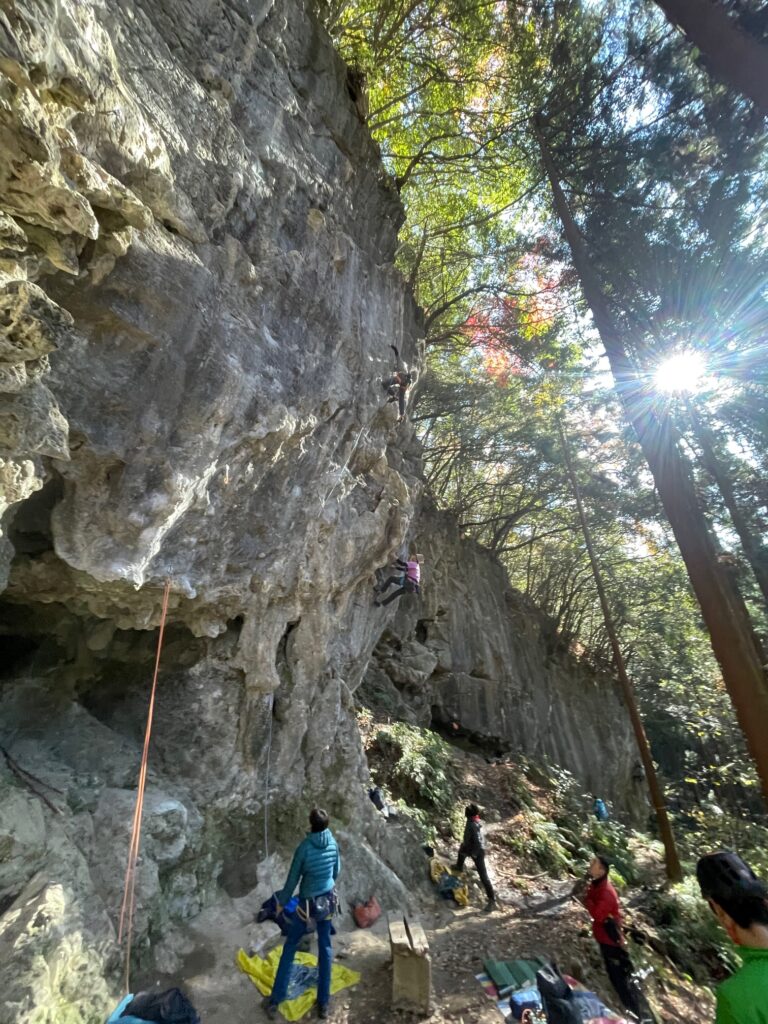
Kawamata is one of the most popular limestone crags near Tokyo, offering a large number of routes suitable for beginner and intermediate climbers.
The climbing area is divided into several sectors, but due to a recent rockfall in the Kaminari Iwa sector, the Komori Iwa sector is currently the most recommended area.
Thanks to its orientation, Kawamata tends to stay relatively warm, making it a rare winter climbing destination near Tokyo.
Local tip
The bus ride from Hanno takes about 40 minutes, and in spring it can get extremely crowded with hikers.
For the return trip, consider boarding at Kajiya-bashi bus stop, which is one stop before the popular Sawara-no-Yu hot spring stop. This increases your chances of getting a seat.
For 6b+-7a+ (5.11–5.12) Climbers : Kitagawa (北川)
Location: Nishi-Agano Station
Approach : 30–40 minutes walk from the station
Rock Type: Chert
Number of Routes: 18 (mostly 6a-7a+ / 5.10–5.12)
Best Season: Spring & Autumn (March–May, September–November)
Recommended Routes: Hokuraku Shimon (7a-7a+ (5.11d)), Nishigaura (7b+-7c (12c))
Train Access from Shinjuku
1.JR Yamanote Line → Ikebukuro
2.Transfer to Ikebukuro Line →Hanno station
3.Transfer to Seibuchichibu Line → Nishi-agano station
Travel time: ~2.5 hours (All accessible with Suica/Pasmo)
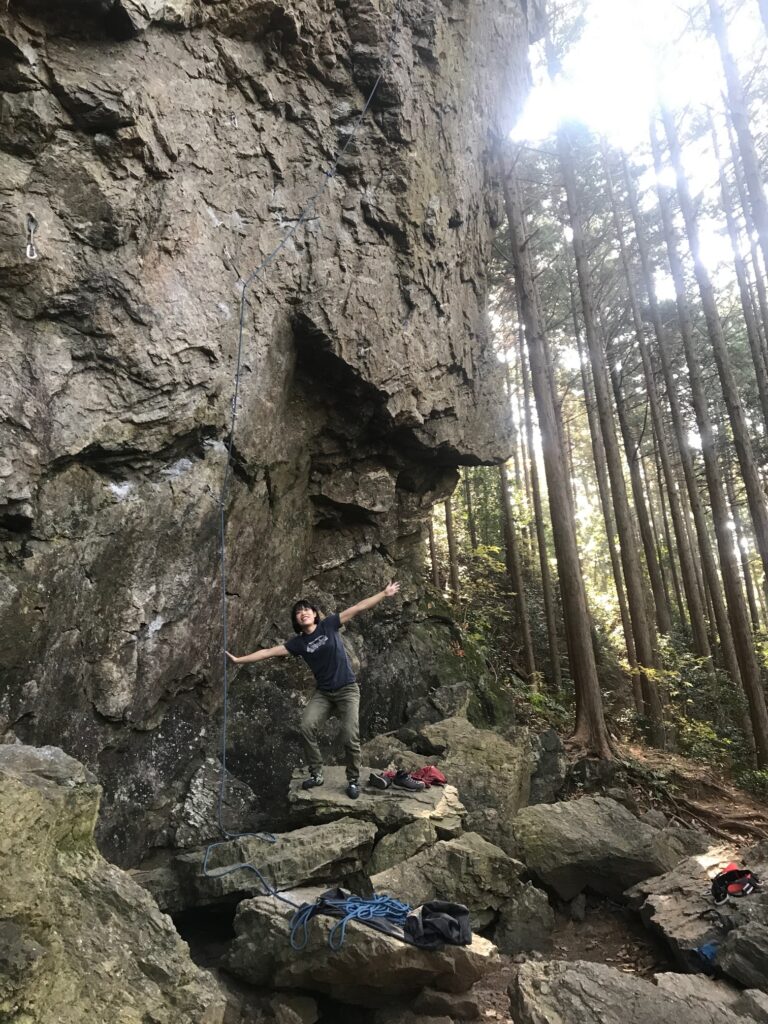
Overview
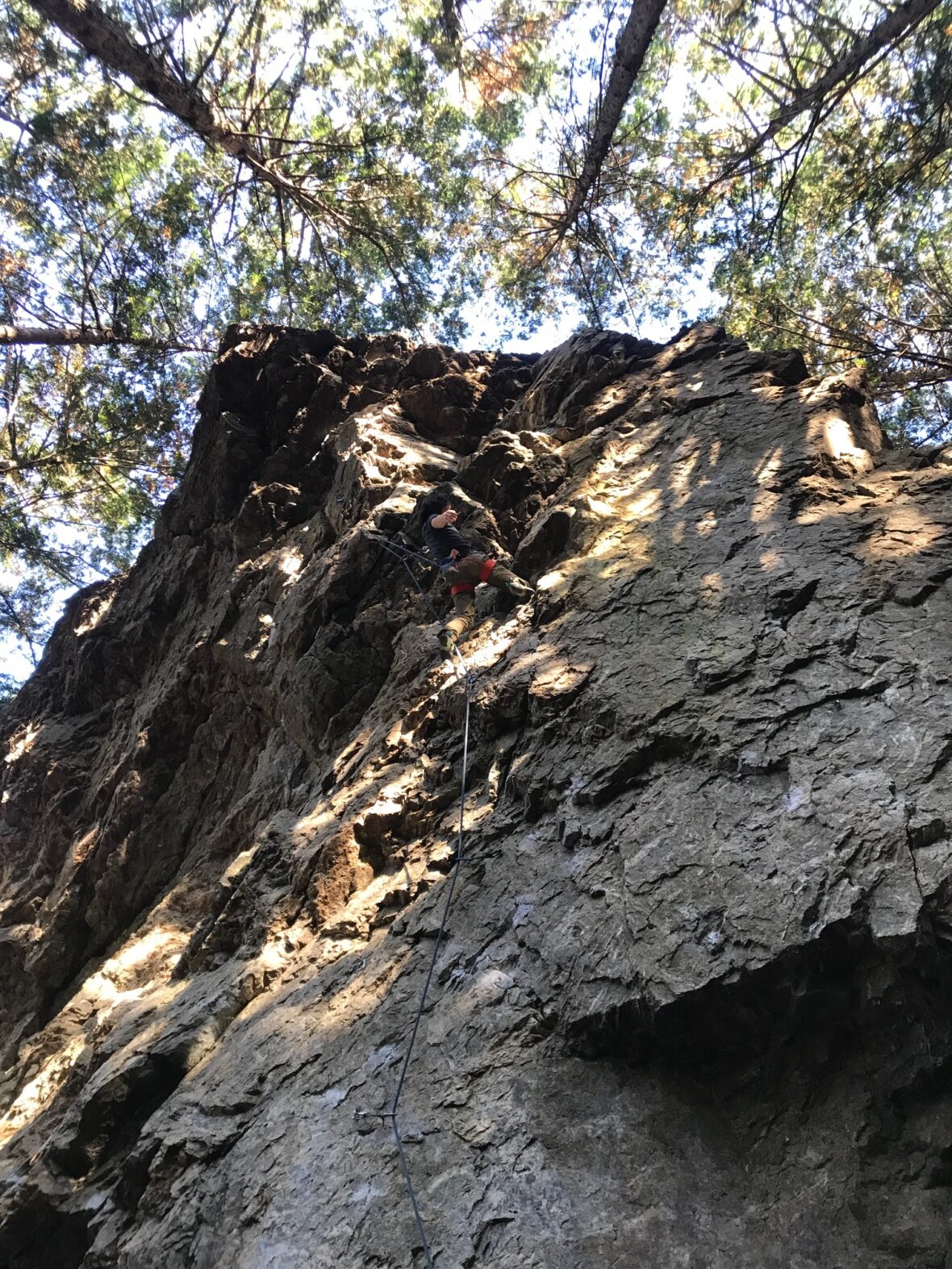
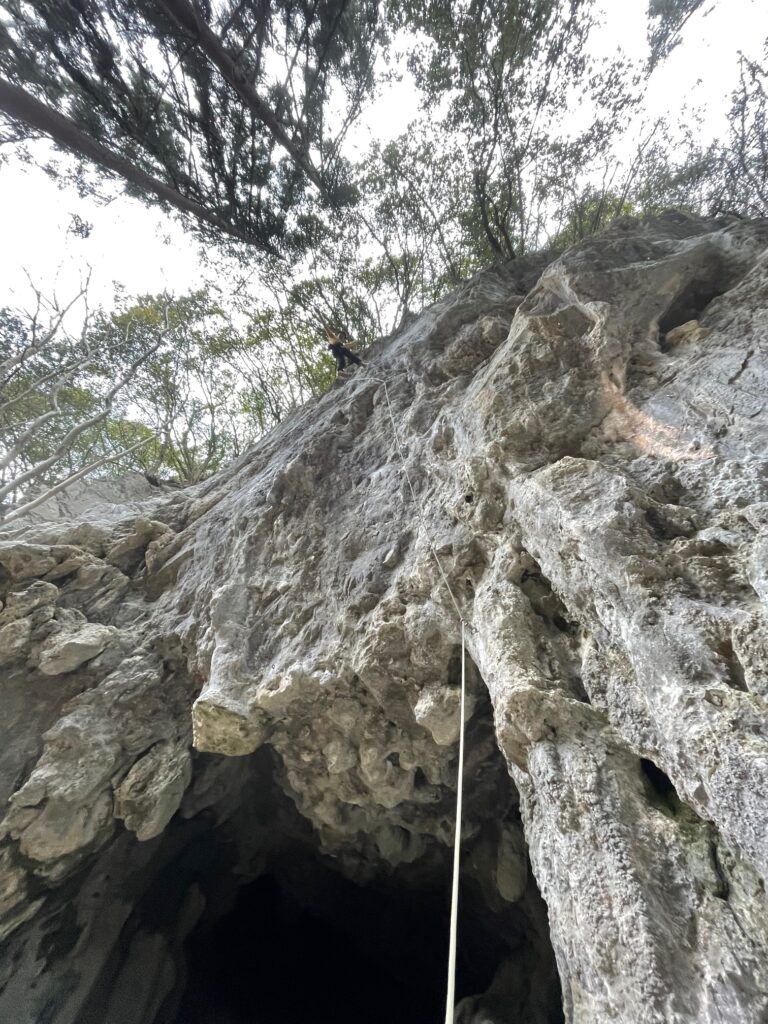
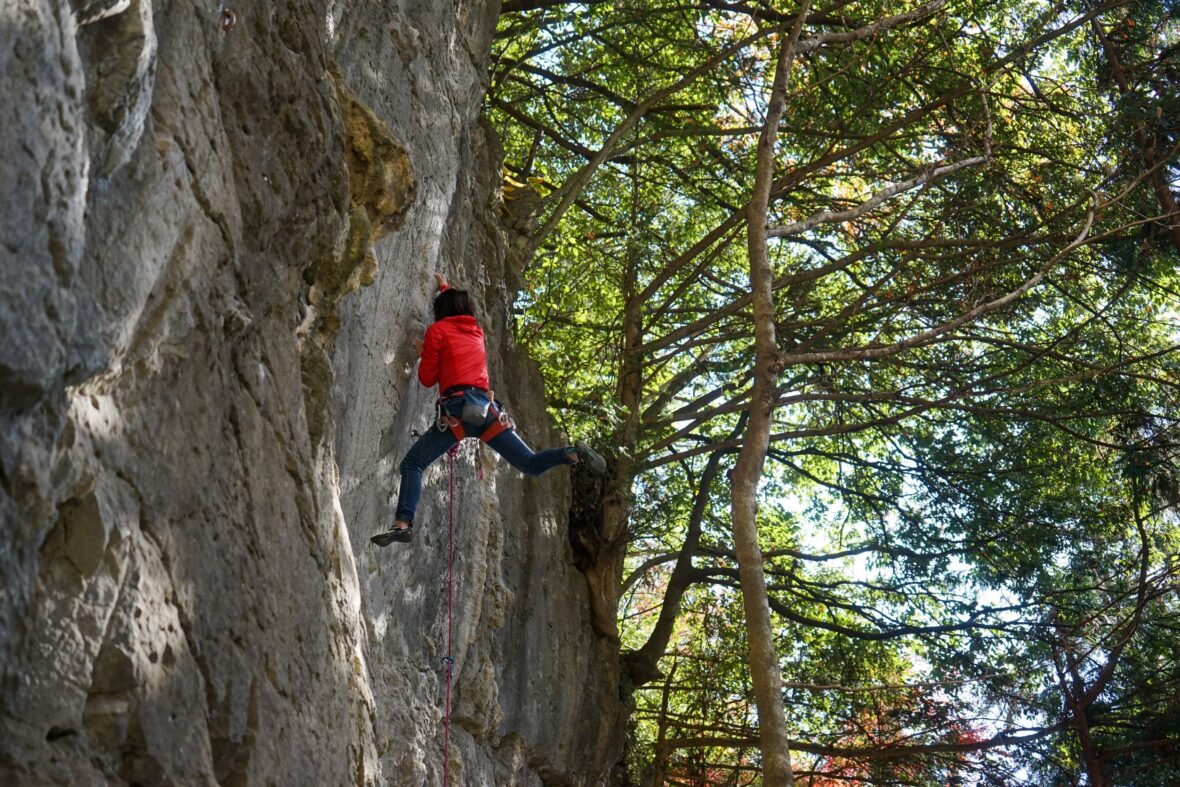
Kitagawa is a small but high-quality crag with many interesting routes. Despite being a smaller crag, the staging area is comfortable.
A compact but high-quality crag. Since you don’t need a bus, you won’t have to worry about schedules. The walk from the station is flat and easy.
Because the cliff is located in the forest, it dries slowly after rain. Even two days after rainfall, some routes may still be wet. However, routes like Hokurakushimon and Nishikigaura tend to dry relatively quickly.
Fun fact
Above the crag stands a stone monument dedicated to Akiba Daigongen, a local deity worshipped by the community.
When I was trying Nishikigaura, I greeted the shrine in the morning and asked for permission to climb. That day, I managed to send the route. It might be worth saying hello before you climb!
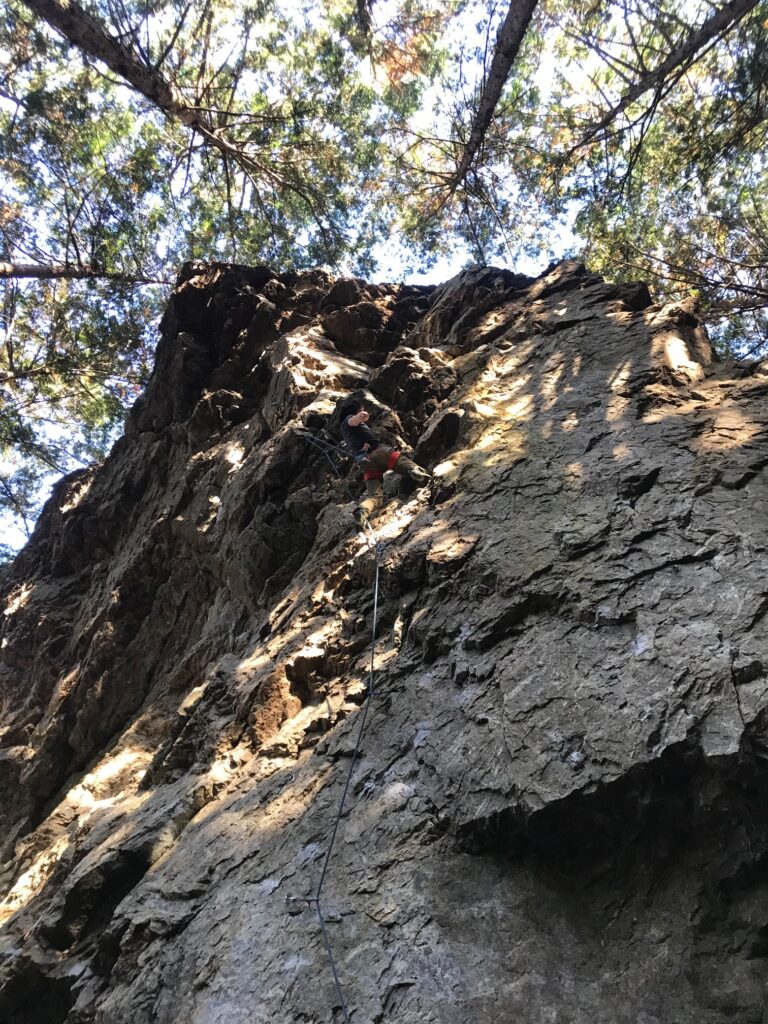
For 7a+-7c+ (5.12–5.13) Climbers : Shoji-iwa (障子岩)
Location: Near Musashi-Itsukaichi Station+ bus to Kanotoiwa Iriguchi (30 min)
Approach :15-20 minutes walk from the bus stop
Rock Type: Limestone
Number of Routes: 63 (mostly 6a – 7a+ / 5.10–5.12)
Best Season: Autumn to Spring (roughly September through May)
Recommended Routes: Fifty Storm (6b+–6c (5.11a), Odoru Konnyaku (7c+ (5.13a))
Train Access from Shinjuku
1.JR Chuo Line → Tachikawa Station
2.Transfer to JR Ome Line → Haijima Station
3.Transfer to JR Itsukaichi Line → Musashi-Itsukaichi Station
4.Bus → Kanotoiwa Iriguchi (Bus timetable is here)
Travel time: ~2.5 hours (All accessible with Suica/Pasmo)
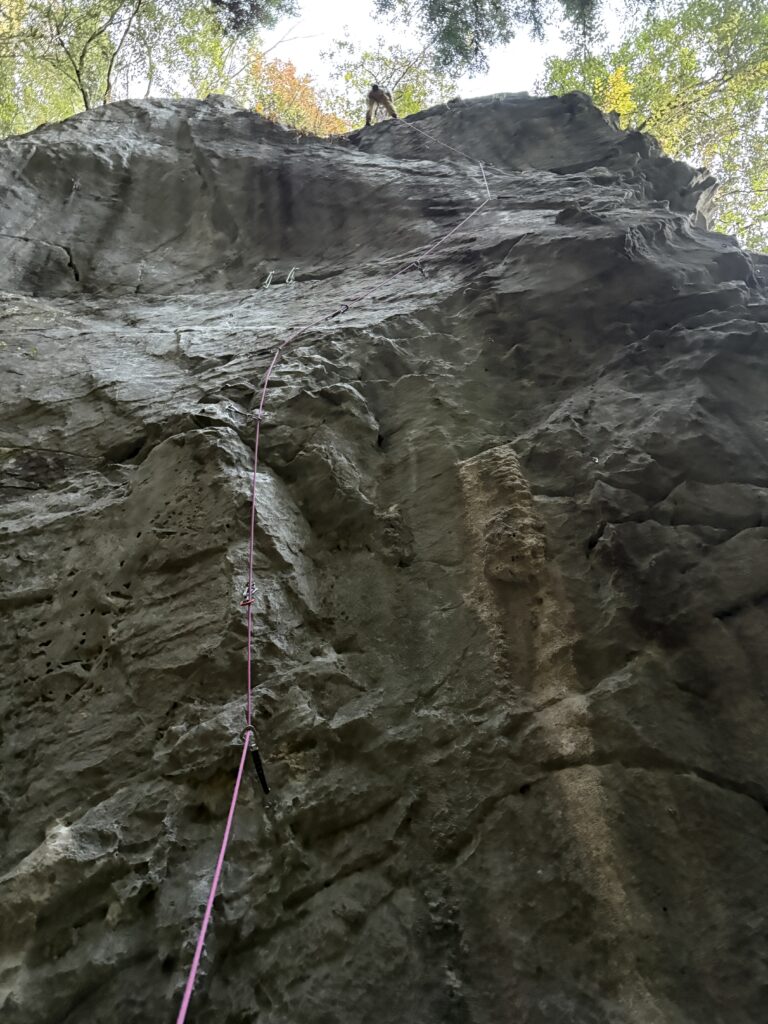
Overview
Shojiiwa faces southwest to southeast, and the southeast-facing sectors receive plenty of sunlight, making them surprisingly warm even in winter.
Overall, the grades here tend to feel stiff, and some of the bolts are quite old, so extra caution is recommended.
Fun fact
The famous route Odoru Konnyaku was first ascended by Kusano San, who is known for proposing the Japanese Dan grading system. The route is also featured in the classic climbing book Old But Gold by the late Sugino.
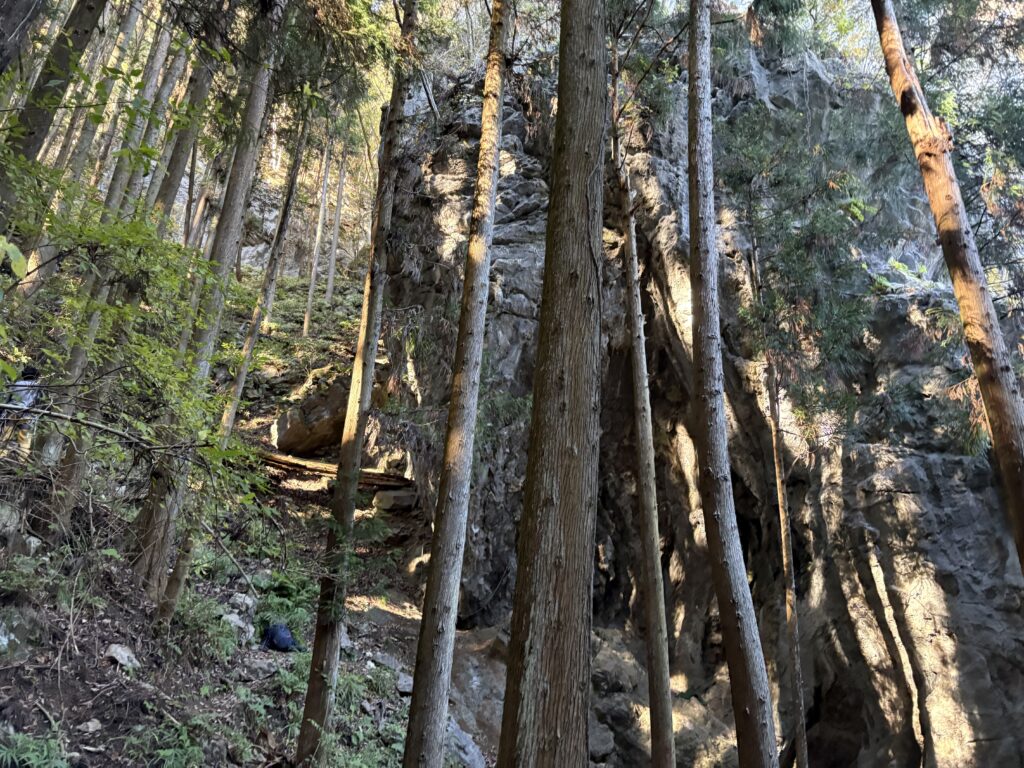
FAQ – Climbing in Okumusashi Without a Car
Q: Do I need a Japanese climbing permit or registration?
A: Most of the areas listed here are open-access, but they are maintained by local volunteers. Please be aware that access is a privilege, not a right. Always check the latest information on the JFA (Japan Free Climbing Association) website before you go. Some areas may be temporarily closed due to access issues with local residents, or recent rockfalls.
Q: Are these crags beginner-friendly?
A: Yes, Tenno-iwa is particularly famous as an introductory crag. However, outdoor climbing requires different skills than gym climbing. If you are new to outdoor climbing, I recommend joining a guided course first.
Q: Are there access rules I should know about?
A: Yes. Access ethics are strictly upheld in Japan. To ensure these crags remain open, please follow these basic rules:
・Keep noise low when passing through or near villages.
・Take all your trash home (leave no trace).
・Respect all local access restrictions and signage.
・Check local conditions: In addition to these general rules, each crag has specific guidelines (e.g., parking, seasonal closures, or restricted sectors). Always check the latest information on the JFA (Japan Free Climbing Association) website before you go.
Q: Are these crags bolted sport climbing areas?
A: Yes. All the crags listed here are bolted sport climbing areas. However, some routes have older bolts, so climbers should always check protection carefully and climb within their limits.
Q: What climbing grade should I be comfortable with?
A: I recommend being comfortable leading at the following levels:
・5.10 / 6a: Recommended for Tenno-iwa (The most beginner-friendly spot)
・5.11 / 6b: Recommended for Kawamata or Kitagawa
・5.12 / 7a: Recommended for Shoji-iwa
If you are new to outdoor climbing in Japan, Tenno-iwa is the best place to start.
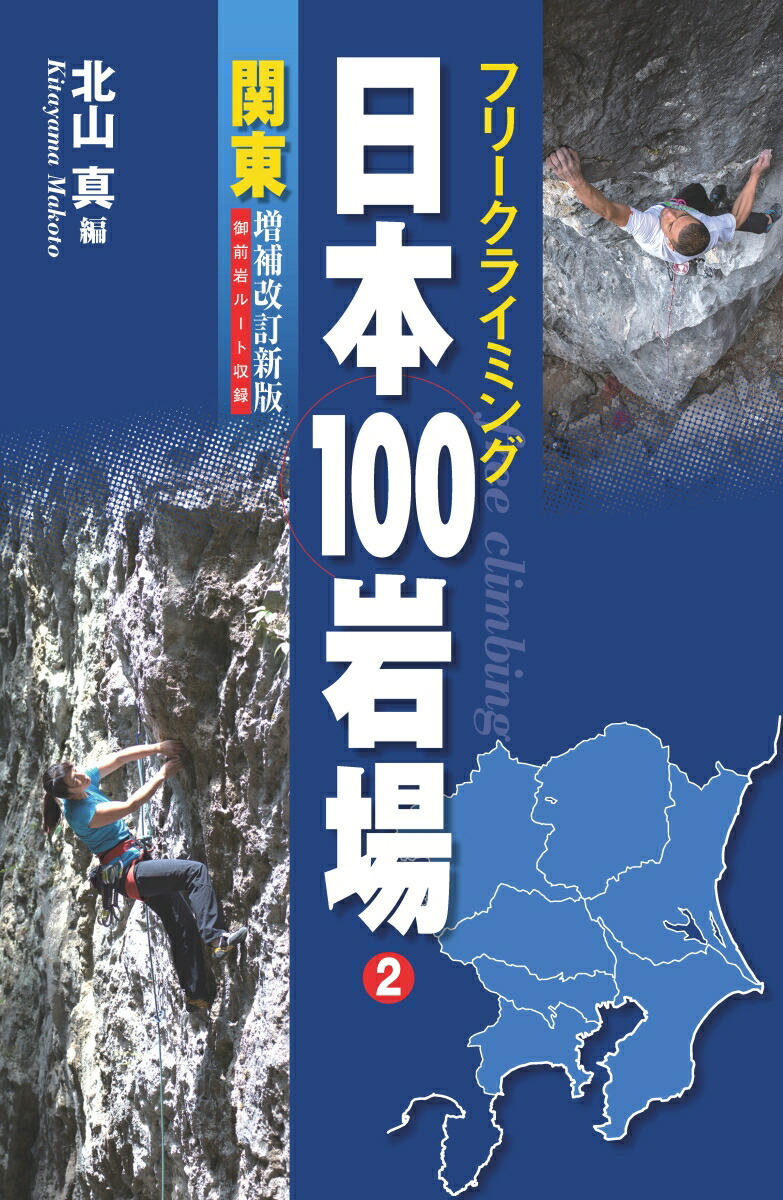
topo for this area
Topo (climbing guidebook) for this area
Closing
In this article, I introduced several climbing areas in Okumusashi that can be reached by public transportation.
In future posts, I will write detailed guides for each crag, including:
・approach descriptions
・recommended routes
・anchor information
・and local tips
If you’re planning to climb near Tokyo without a car, stay tuned!