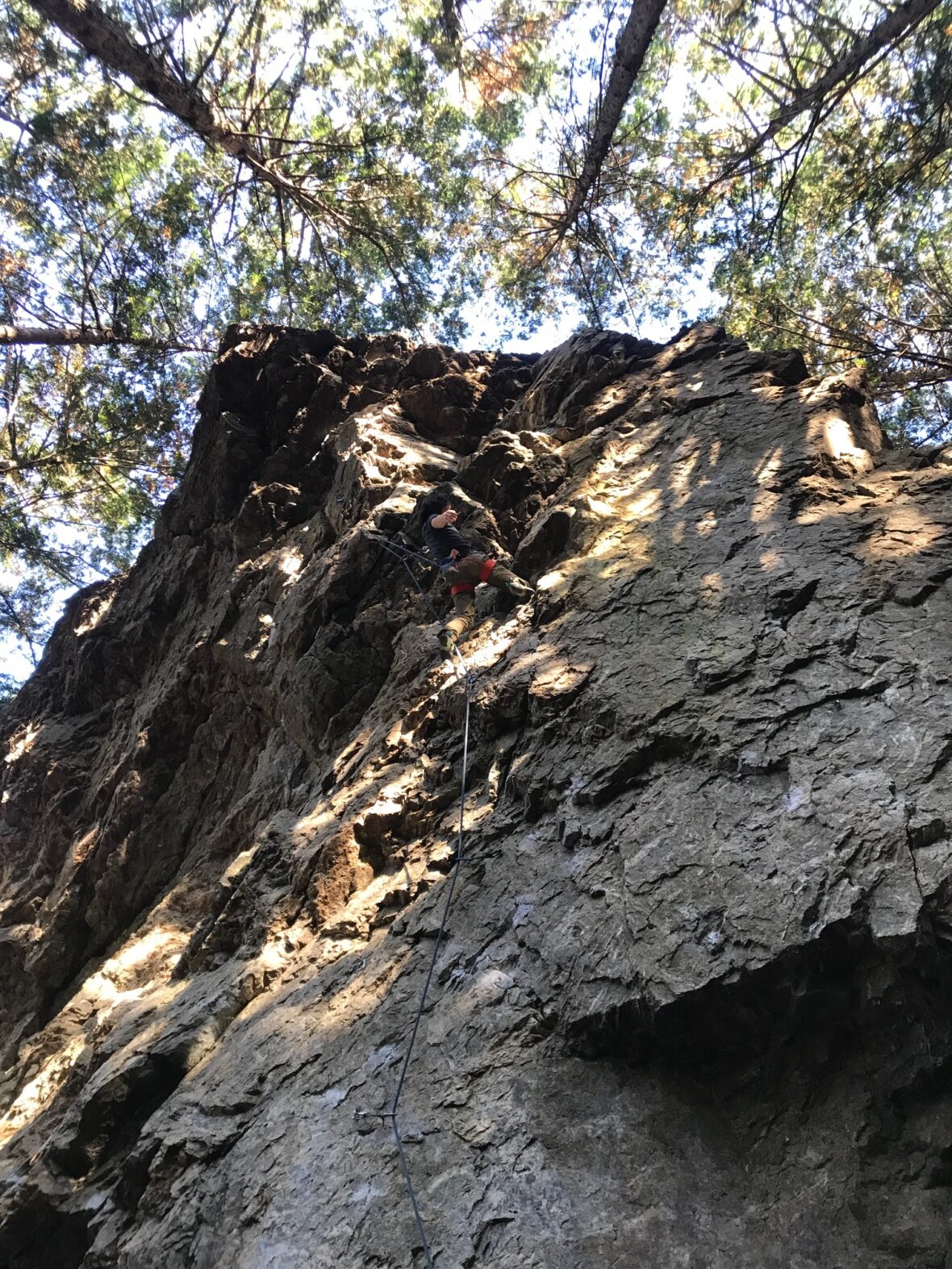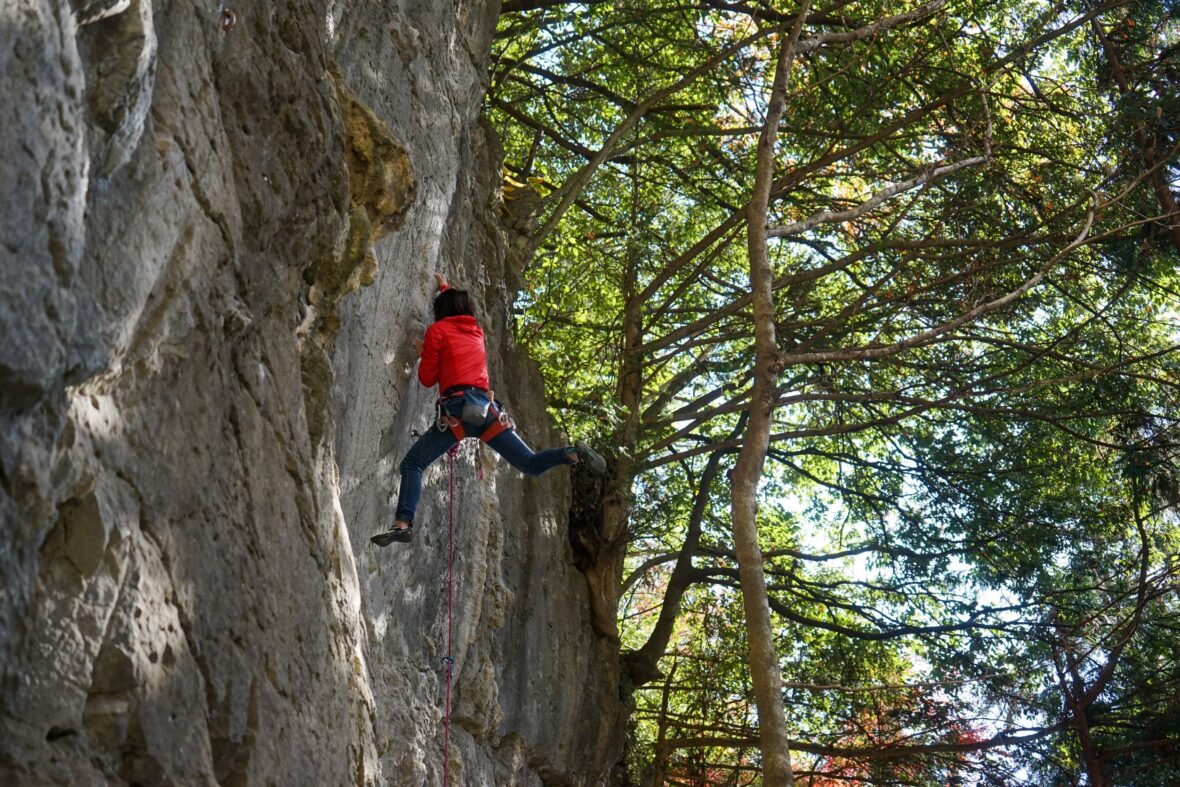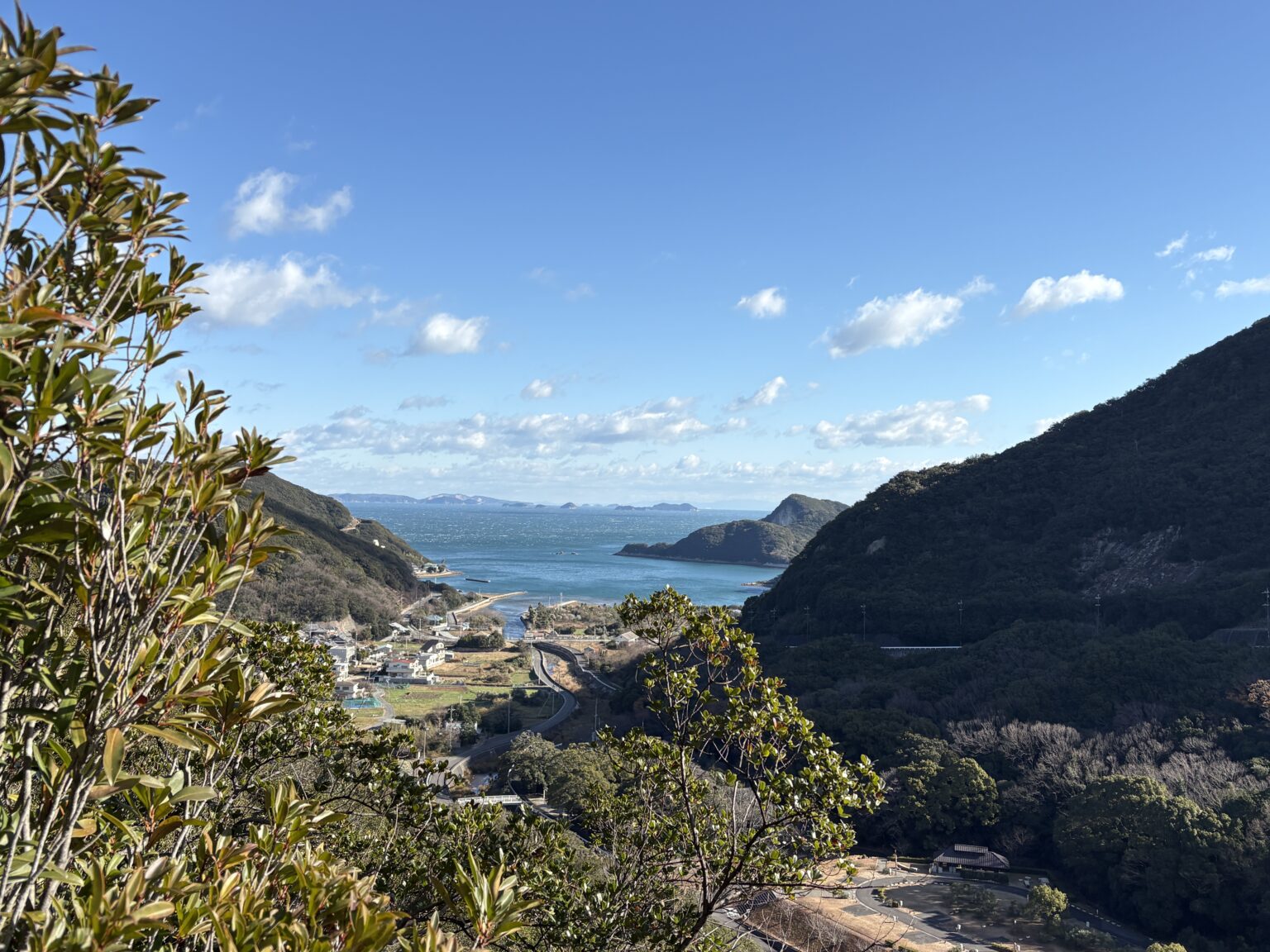
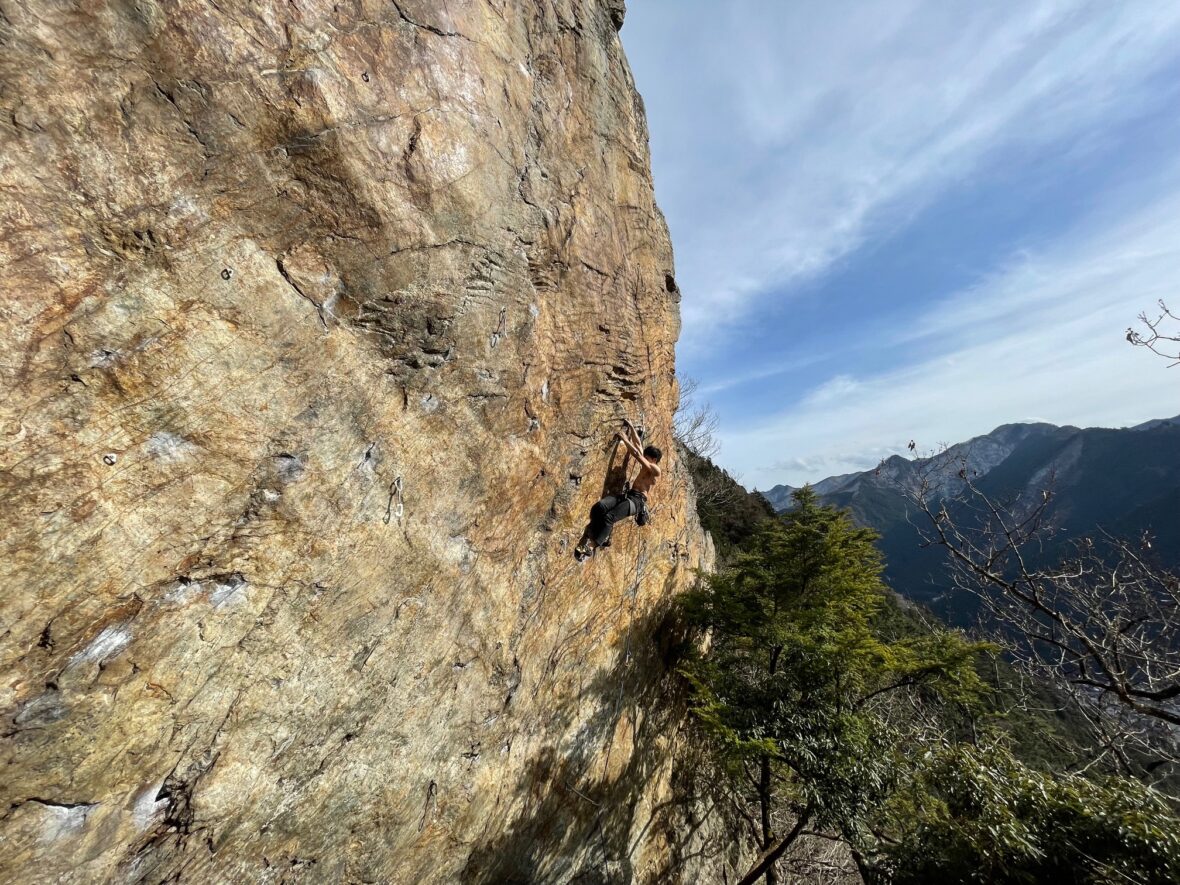
Hikawa Byobu-iwa is one of the most accessible sport climbing crags near Tokyo, reachable entirely by train.
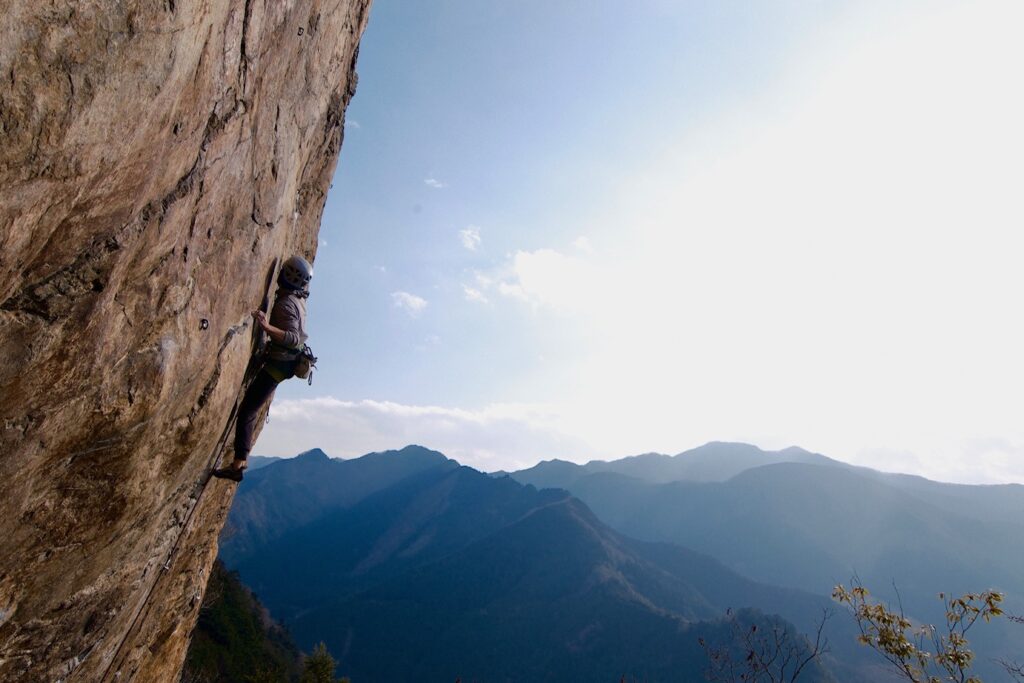
This crag has been loved by Japanese climbers for decades, especially as a winter climbing destination. While many crags around Tokyo become too cold or damp in winter, the sunny walls of Hikawa Byobu—particularly Sector C—offer excellent conditions.
The area offers a wide range of grades from 6a to 7c+ (5.10 to 5.13), and has historically been used for multi-pitch climbing.
With its convenient access, technical climbing style, and historical routes, Hikawa Byobu Iwa continues to attract climbers from beginners to elite climbers.
Quick Facts
Location: Okutama Station, Tokyo
Best Season: Autumn to Spring (October to March; C Peak: December to February)
Routes: ~38 routes (Mainly 6a–7a+, some 7c+)
Rock Type: Chert
Height: 10–25 m
Quickdraws: 6–10
Recommended Rope: 50 m (30 m is enough for most routes in Sector C)
Access from Shinjuku: JR Chuo Line to Ome Station, then transfer to JR Ome Line to the final stop, Okutama Station (Approx. 2 hours)
Approach: ~45 minutes walk from Okutama Station
GPX Track(from Okutama Station to Hikawa Byobu Iwa): [Download here]
Note: To help us improve our guides for the climbing community, please answer a quick 2-minute survey to unlock the GPX download link.
Why Climb Here
・One of the few winter-friendly crags near Tokyo.
・Accessible entirely by train (no car needed).
・Technical face climbing on small edges with delicate footwork
・Classic Japanese routes including Teishibo (7c+ / 5.13a)
・Multiple sectors with routes for different skill levels
Sectors at a Glance
Hikawa Byobu Iwa has around 10 sectors.
Below are the most popular ones.
Sector C
The main climbing area.
• Sunny and warm in winter
• Short but technical routes
• Home of the famous Teishibo (7c+ / 5.13a)
Because of its sunny exposure, this sector can feel quite warm even in winter.
Sector A
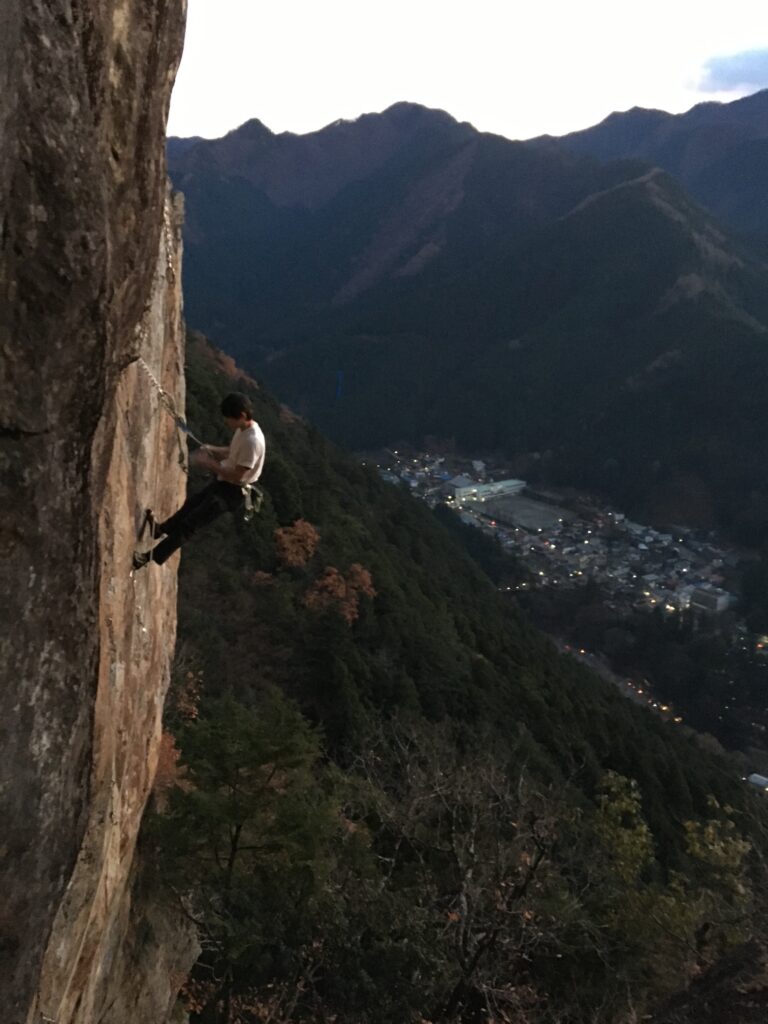
A good area for 5.10 level climbers.
• Several moderate routes
• Home to the powerful route Byoba (7c+ / 5.13a)
• Mostly shaded — best in spring and autumn
Fukuro Iwa (Owl Rock)
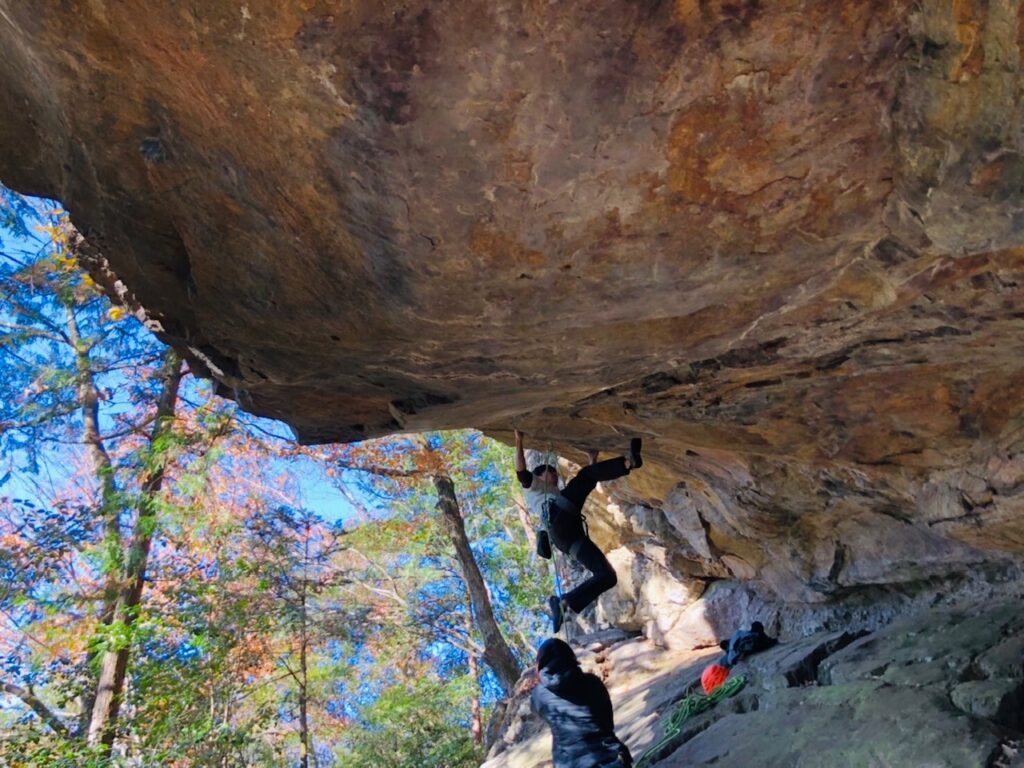
Located along the valley approach.
• Longer routes than Sector C
• Best in spring and autumn
• Dynamic climbing on large holds
The classic route Shurana Obaba no Namida (7b–7b+ / 5.12b) is found here.

The Approach
The approach is not well-marked and can be confusing. Downloading the GPX is recommended.
Note: To help us improve our guides for the climbing community, please answer a quick 2-minute survey to unlock the GPX download link.
1. Start: From Okutama Station, head east. The public restroom at the station is your last chance for facilities, and the vending machines are your last chance for drinks.
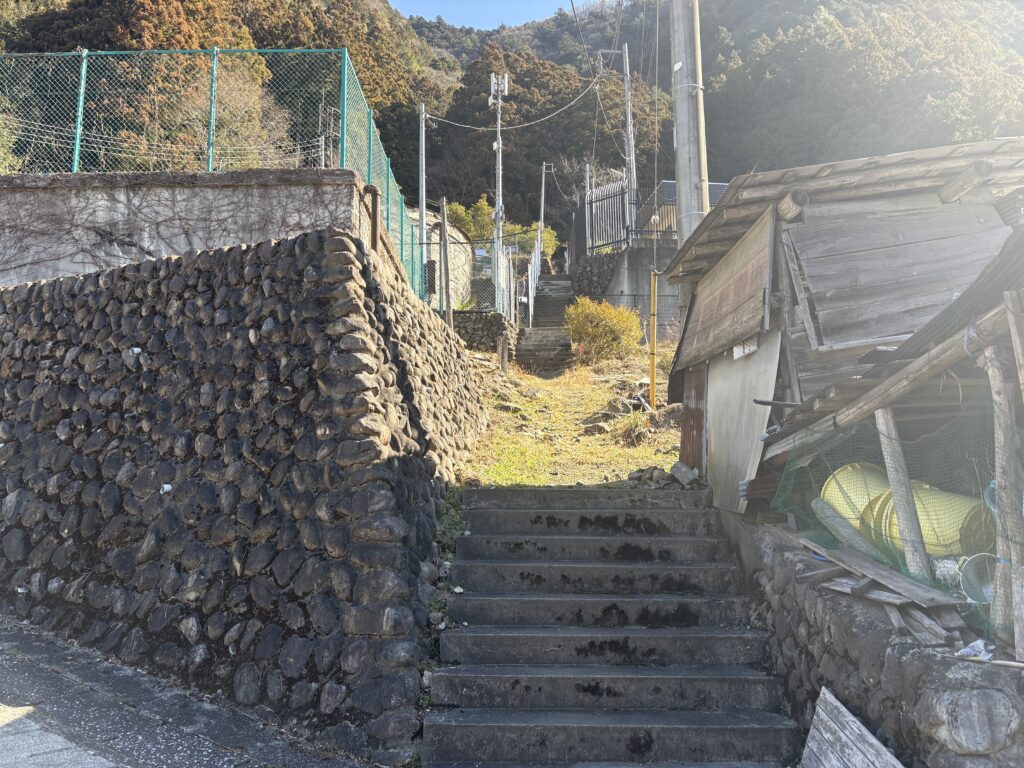
2. Trailhead: Follow the narrow street past the restaurants to the Okutama Welfare Center. Cross the railroad crossing and head toward the mountains. Pass the Hikawa Elementary School and climb the narrow stone steps between residential houses.
3. Routes: There are two ways—the “Valley Route” and the “Ridge Route.” The Ridge Route is recommended as it is well-defined, though steep. As of February 2026, the Valley Route is prone to slippery, deep leaf litter and poor trail visibility.
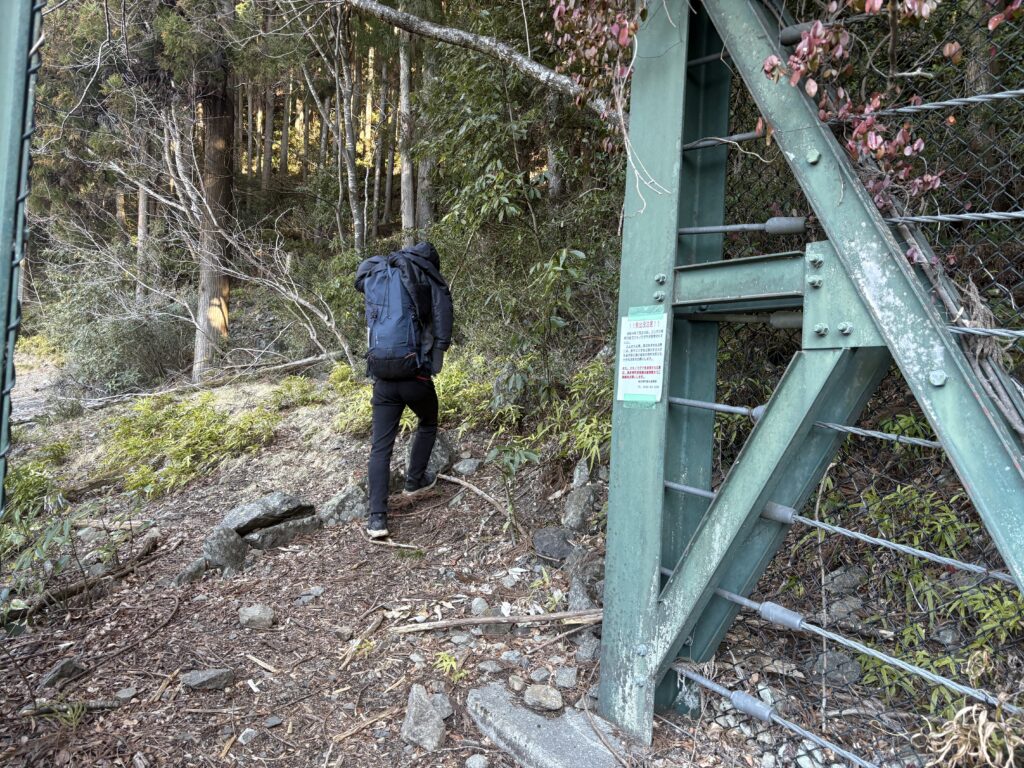
4. Navigation: There are no trail markers, but simply follow the ridge upward.
Partway up you will find fixed ropes to help with the steep sections.
Because some old trees fall across the trail, the path may occasionally be blocked. When in doubt, continue following the switchback trail uphill.
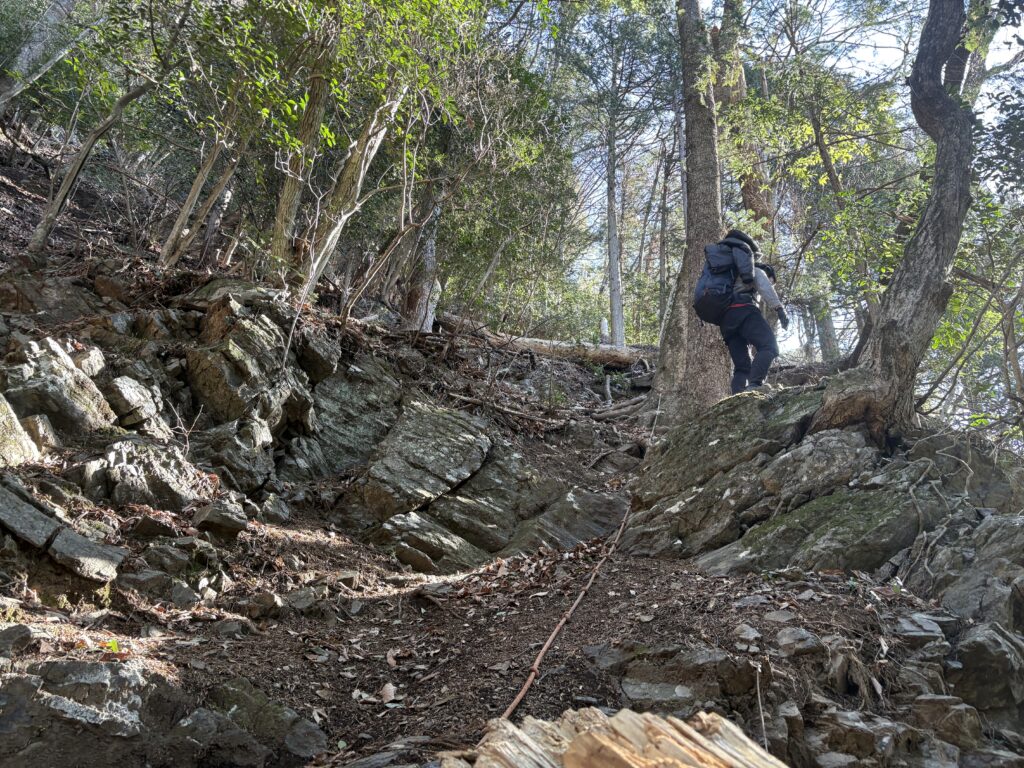
5. Look for signs saying “Prevent Wildfires” (山火事防止).
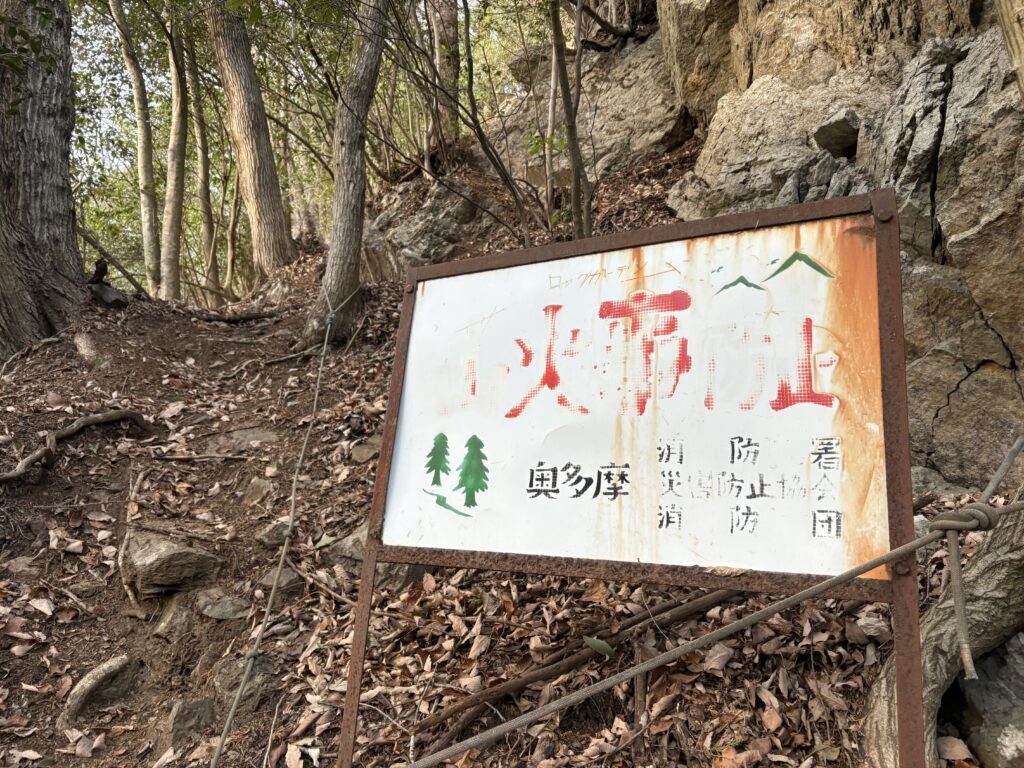
・For Sector A: From the sign, traverse to the right.
・For Sector C: Continue left toward the summit. You will encounter fixed ropes and ladders. When the path splits, go right to traverse to the crag. Be careful: the path is narrow and covered in loose leaves. Then, you will arrive at the top of Sector C.
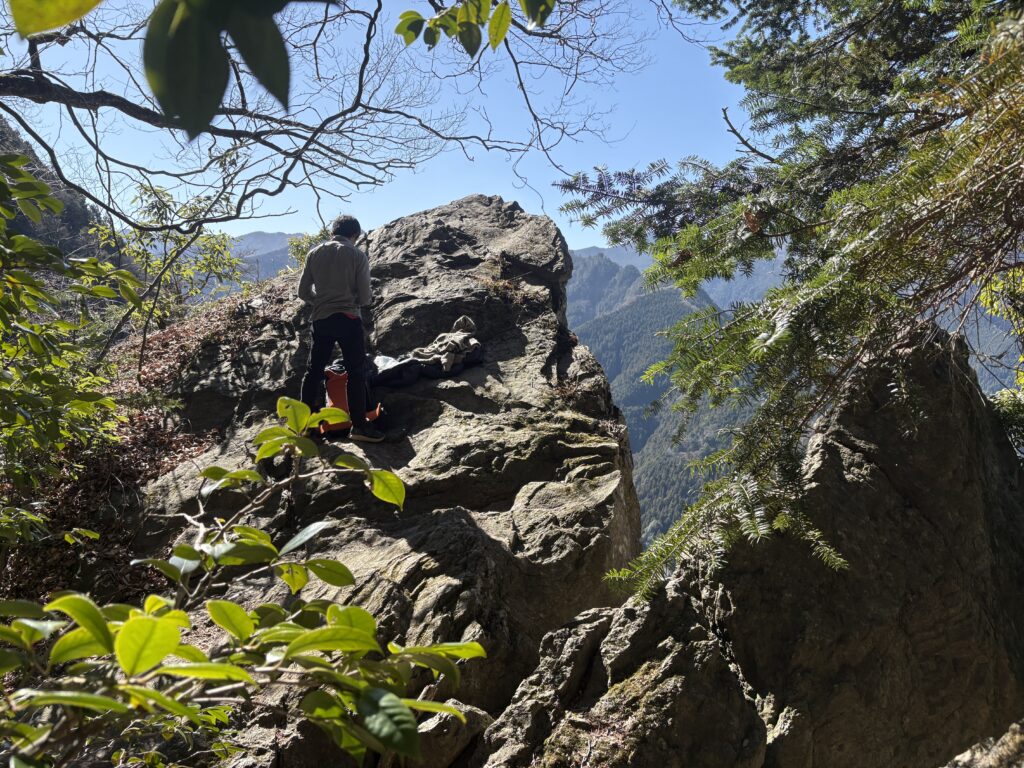
6. Access to Sector C: To reach the base of the climb, descend the steep slope using the fixed ropes. As of February 2026, these ropes are old and weathered; never trust just one rope. Use all available lines and back up your descent.
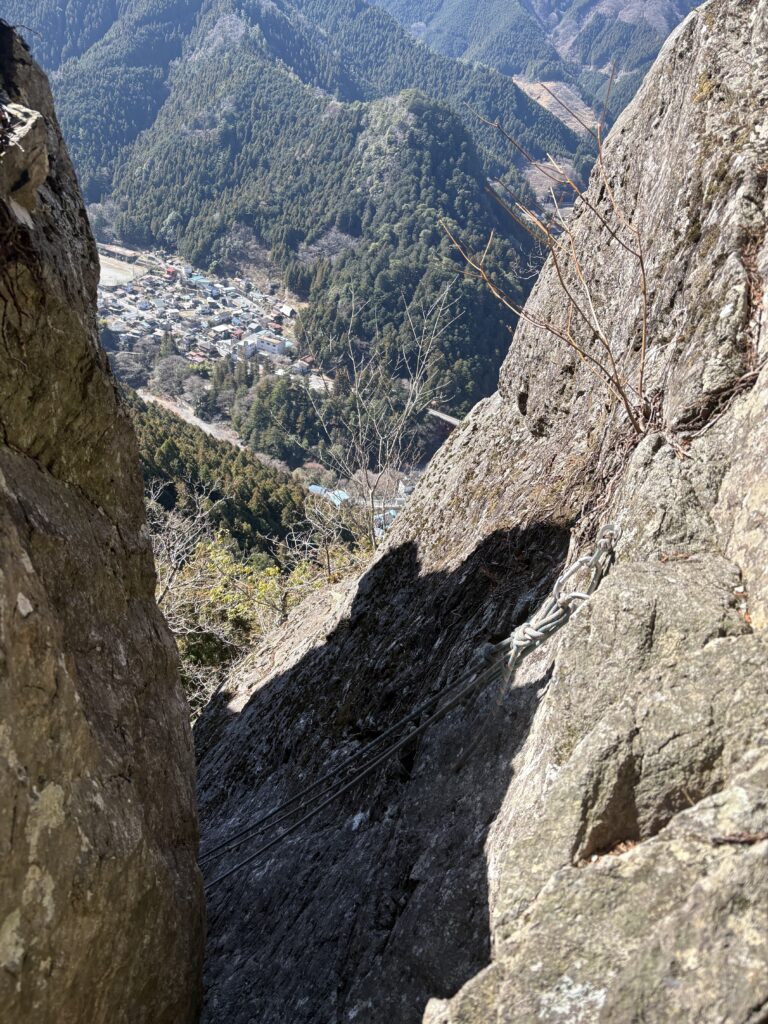
Approach time from Okutama Station to Sector C is about 45 minutes.
The valley approach takes about 50–55 minutes.
Descent
The return route begins slightly differently.
1.From the top of Sector C, there is a chimney with a fixed anchor. Most climbers rappel down this chimney. After descending, you will reach the base of Sectors A and B.
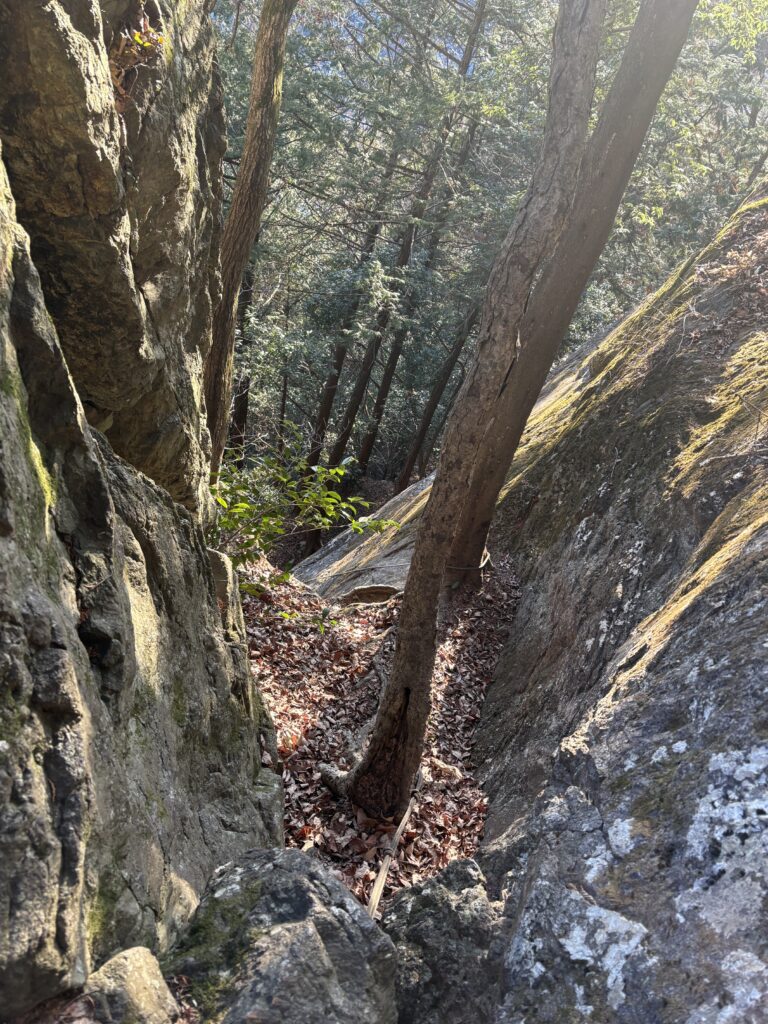
2.Traverse right with the mountain behind you and you will see the Fire Warning sign again.
From there, follow the same trail back to Okutama Station.
Descent time from Sector C to Okutama Station is about 30 minutes.
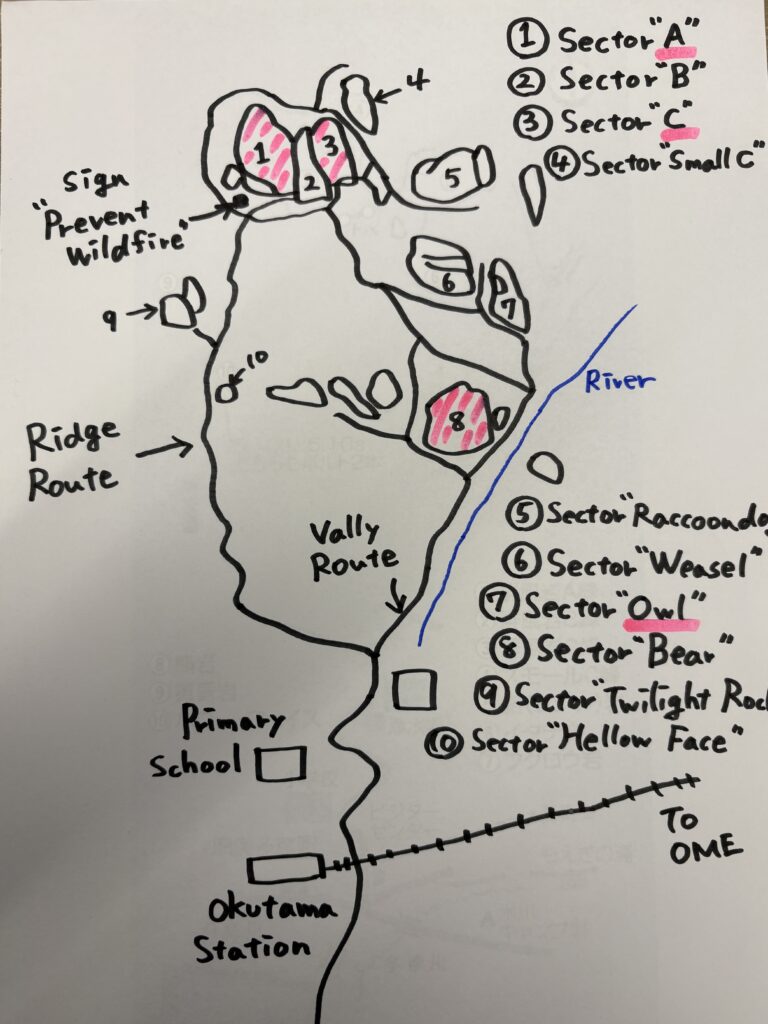
Topo
Topo (climbing guidebook) for this area
Top 3 Recommended Routes
Iku Inoshishi (7a-7a+ / 5.11d)
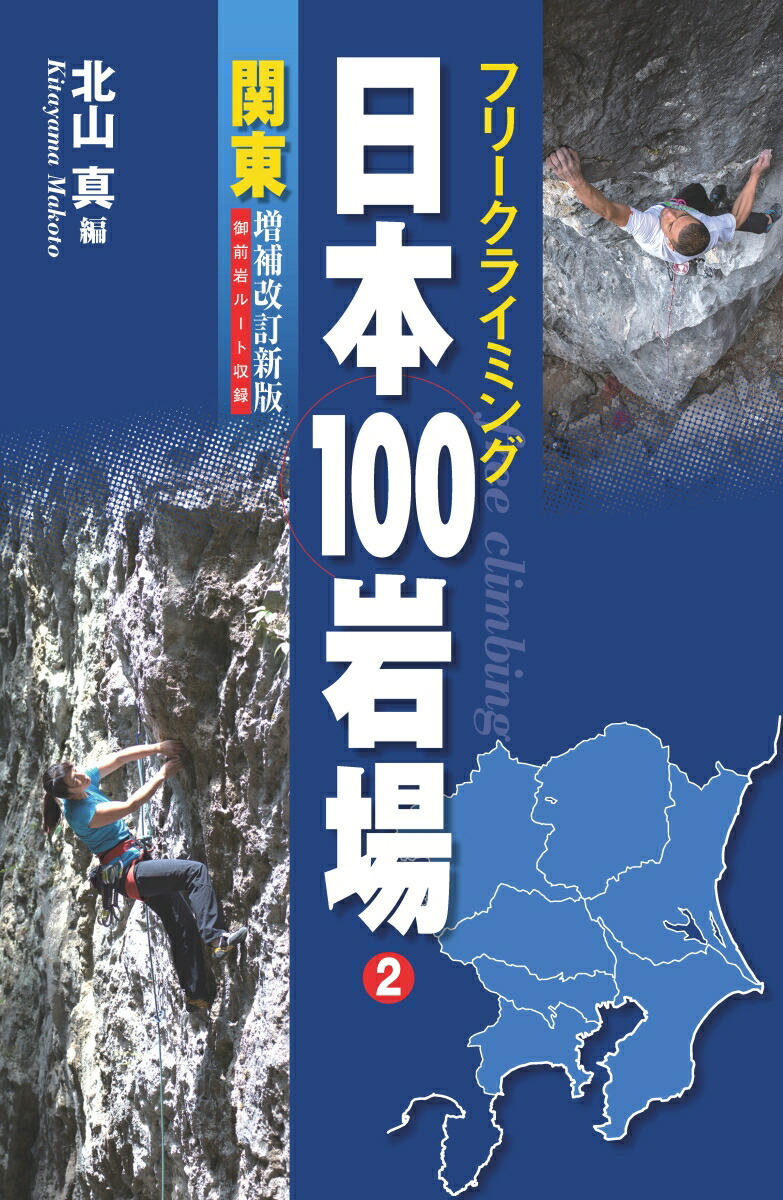
Located on the left side of Sector C, this short but intense route is featured on the cover of the Japanese guidebook ”Nihon 100 Iwaba (Japan’s 100 Climbing Crags)”
Although it only has three bolts, every move requires concentration until the very end, making it a fun challenge.
Teishibo (“Low Fat”) (7c+ / 5.13a)
One of the most iconic routes in Japan.
Established by Kusano San, the climber who proposed Japan’s Dan grading system, this beautiful and delicate line is a dream route for many Japanese climbers.
Despite having only three bolts, the route is not short — it is runout.
The holds are extremely small and become almost impossible to use when sweaty.
This is a technical challenge that cannot be powered through.
As a side note, “Low Fat” doesn’t mean that you have to be low body fat (i.e., skinny) to climb it. According to Kusano San, the route was named simply because low-fat milk was popular at the time of the first ascent.
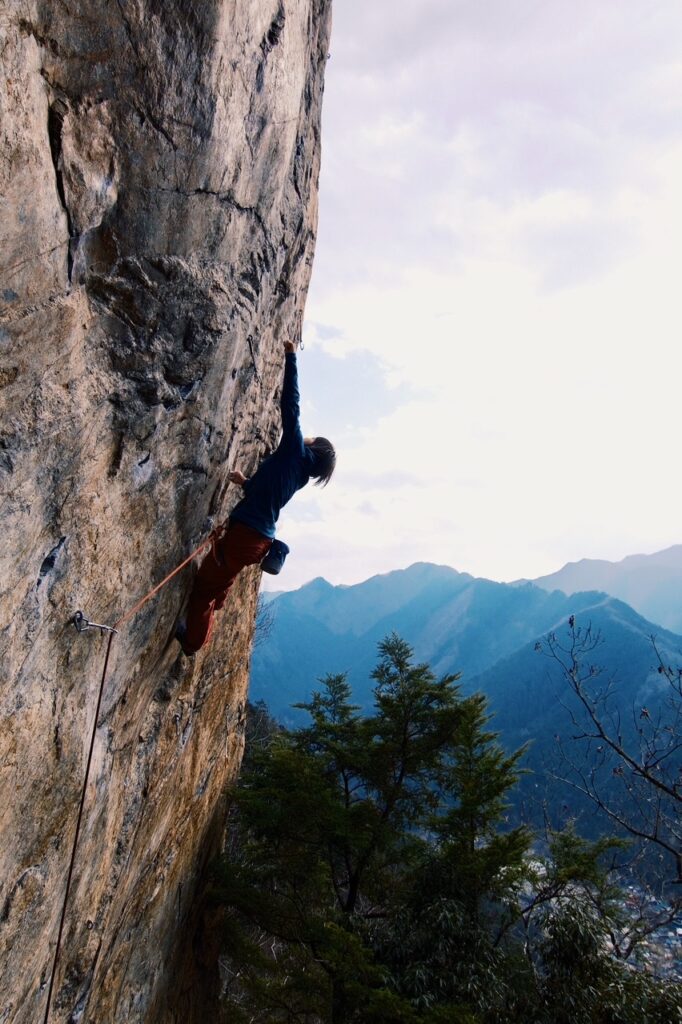
Shurana Obaba no Namida (7b-7b+ / 5.12b)
Located at Fukuro Iwa.
Compared to the short routes in Sector C, this line is longer and more sustained.
The climbing is more dynamic, linking large positive holds with powerful movement.
Because it faces the valley, it can be cold in winter. The best seasons are spring and autumn.
Safety & Rock Quality
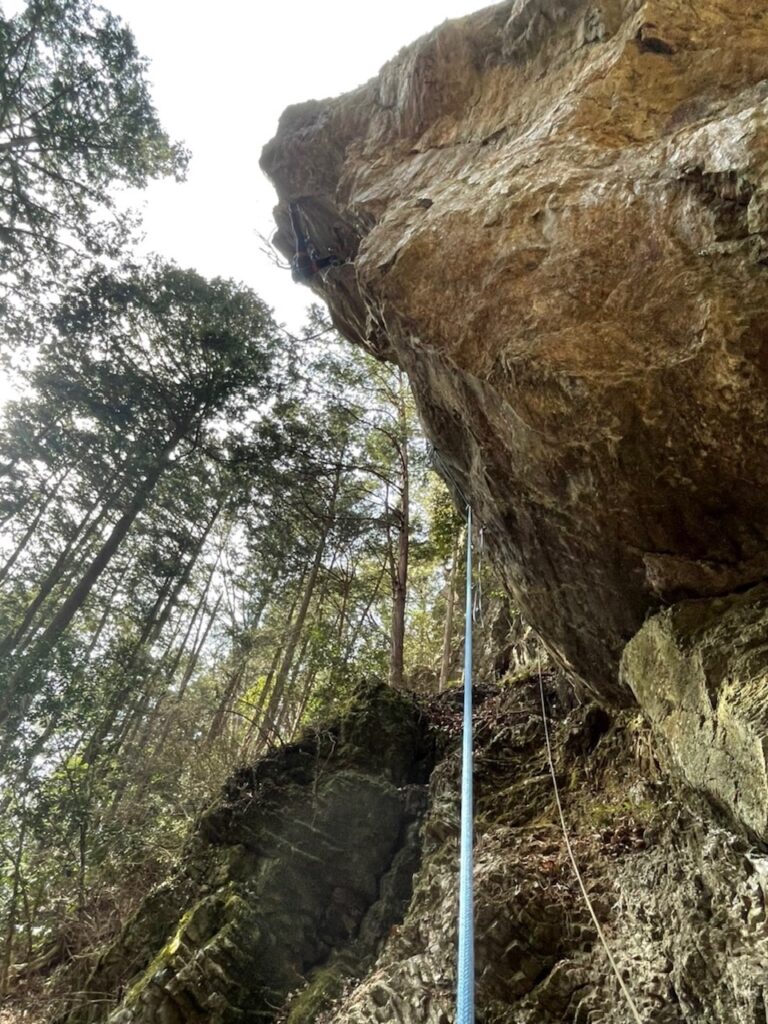
Rock Quality: The rock is generally fragile, especially in Sector C. Beware of loose rock and potential hold breakage.
Bolts: Many are old, particularly at Sector A. Avoid using old anchors; instead, top-out and scramble onto the hiking trail if possible. Always inspect hardware before committing.
Fixed Ropes on the Approach: Many fixed ropes along the approach are old and partially damaged. Use them with caution.
Helmet: Highly recommended. If you fall awkwardly on Teishibo, there is a possibility of hitting your head on the rock. Although it is a sport route, wearing a helmet is recommended. Given the fragile rock quality of the entire crag, helmets are generally a good idea.
Gear: A 50m rope is sufficient for all routes. If climbing only at Sector C, 30m is enough. Bring a PAS (Personal Anchor System) for the narrow staging area at Sector C.
FAQ- Hikawa Byoubu
Q: Can you climb here in winter?
A: Yes, it is one of the few spots near Tokyo that is actually best in winter. Sector C can get quite warm (15°C+ can feel too hot). 8–14°C is the sweet spot. Because the crag relies on sunlight for warmth, cloudy or windy days can feel much colder.
Be aware that:
• Cedar pollen in March can be severe
• Stink bugs are common until late November
Because of this, many climbers consider the best season for Sector C to be December–February.
Other sectors are more comfortable in spring and autumn.
Q: Does the rock dry quickly?
A: Sector C dries extremely fast, because it’s exposed and gets good airflow. It is often climbable even if it rained earlier in the morning.
However, Fukuro Iwa is inside the forest and dries more slowly. If it gets wet, it may take about a day to dry.
Q: Is this area good in the rain?
A: Yes, it handles light rain well. Except for Sector C, most areas are located within the forest, so light rain is generally not an issue.
Sector C is more exposed, but the wall is slightly overhanging, so light rain usually does not affect it immediately.
I have even climbed here during snowfall — as someone with naturally dry skin, the extra humidity actually made the friction feel perfect for me.
Q: What time does Sector C get sunlight?
A: In winter, the sun reaches Sector C at around 10:30–11:00 a.m. Once it’s in the sun, it feels very warm, but before that, it can be extremely cold.
Q: Can you reach Hikawa Byobu Iwa without a car?
A: Yes. The crag is accessible entirely by train and walking from Okutama Station.
Q: Is it beginner-friendly?
A: Yes. With many routes in the 5.10 range, it’s a great place to start outdoor climbing.
(In fact, this was the first outdoor crag my husband ever climbed at.)
Q: Is a 50 m rope enough?
A: Yes. Even Shurana Obaba no Namida, the longest route here, can be climbed with a 50 m rope. For Sector C alone, even a 30 m rope is sufficient.
Q: Do I need anything besides quickdraws?
A: Yes. The belay stance at Sector C is very narrow, so belayers should attach themselves to the anchor with a PAS or a sling.
Also, because the descent involves rappelling, climbers who normally belay with assisted devices like a GriGri should bring an ATC or other rappel device.
Q: Do I need a permit to climb here?
A: No permit or registration is required.
However, to keep these crags open, please follow basic etiquette:
• Keep noise low when passing through villages
• Take all trash home
• Respect local access restrictions
• Check the Japan Free Climbing Association (JFA) website for updates.
Post-Climbing Spot: The Local Vibe
After a day on the rock, head to VERTERE, a craft beer brewery located near Okutama Station. While they distribute throughout Japan, the original brewery is located here in Okutama.
There is a take-out shop right in front of the station, but if you have time, I highly recommend visiting the main brewery about 5 minutes away.
The outdoor terrace is the perfect place to chill after a climb. Their food—especially the fish and chips—is also highly recommended!
Closing
If you’re exploring climbing around Tokyo, Hikawa Byobu Iwa is a unique destination with technical climbing, historic routes, and surprisingly easy access.
I’ll continue introducing more Japanese climbing crags in future articles, so feel free to explore the blog and find a crag for your next adventure
Want a smoother climbing trip in Japan?
Navigating Japan’s climbing scene can be tricky with the language barrier and unique local etiquette. If you’re looking for a customized climbing itinerary — including the best crags for your skill level, seasonal recommendations, and detailed logistics — I’m here to help!
I offer climbing concierge services to provide you with a personalized guidebook-style plan, ensuring you spend more time on the rock and less time lost in transit. Feel free to contact me for a consultation!
👉[Check out my Custom Itineraries here]