
“I want to try outdoor climbing in Japan, but I don’t know where to go.”
“I’d love to climb outside, but I’m not comfortable driving in Japan.”
If that sounds like you, this guide is for you.
I’ll be introducing some of the best outdoor climbing areas in Okutama that are easily accessible via train and bus.
There are many excellent climbing areas in Okutama, but I’ve selected a few of my favorites and categorized them by climbing level.
For 6b+-7a+ (5.11–5.12) Climbers : Hikawa Byobu-iwa (氷川屏風岩)
Location: Near Okutama Station
Approach: 45 min hike (steep) from Okutama Station
Rock Type: Chert
Number of Routes: 38 (mostly 6a–7b / 5.10–5.12)
Best Season: Winter (October to March; C Peak: December to February)
Recommended Routes: Ikuinoshishi (7a / 7a+ (5.11d)), Teishibo (Low Fat) (7c+ (5.13a))
Train Access from Shinjuku:
1.JR Chuo Line → Ome Station
2.Transfer to JR Ome Line → Okutama Station
Travel time: ~2 hours (All accessible with Suica/Pasmo)
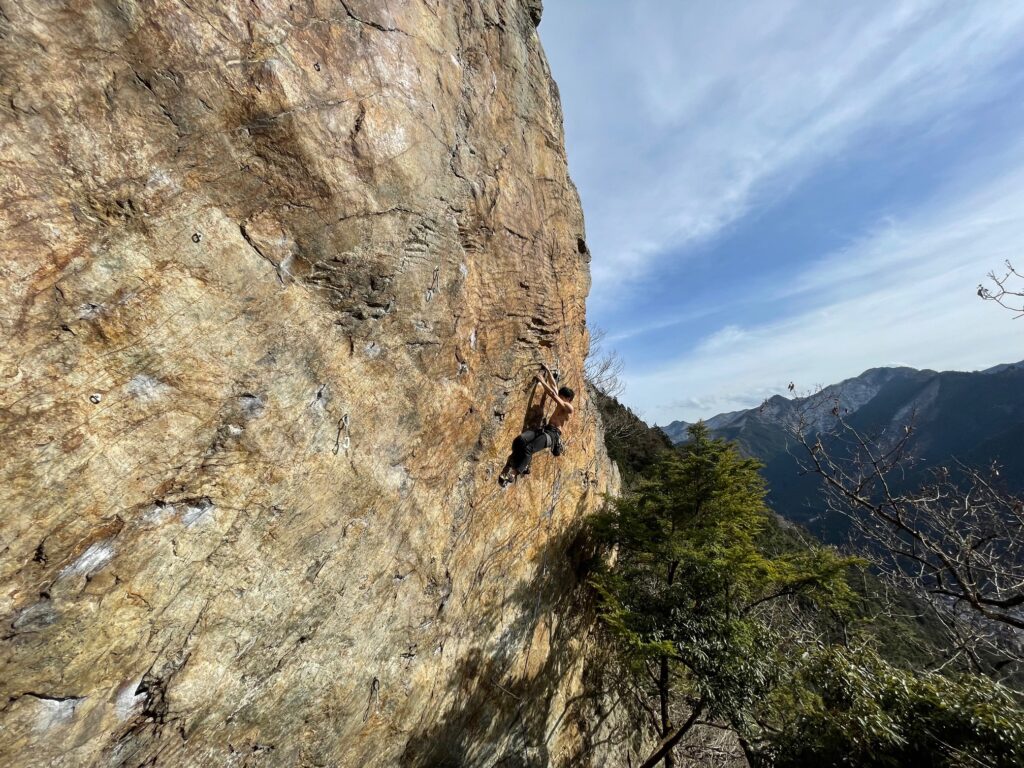
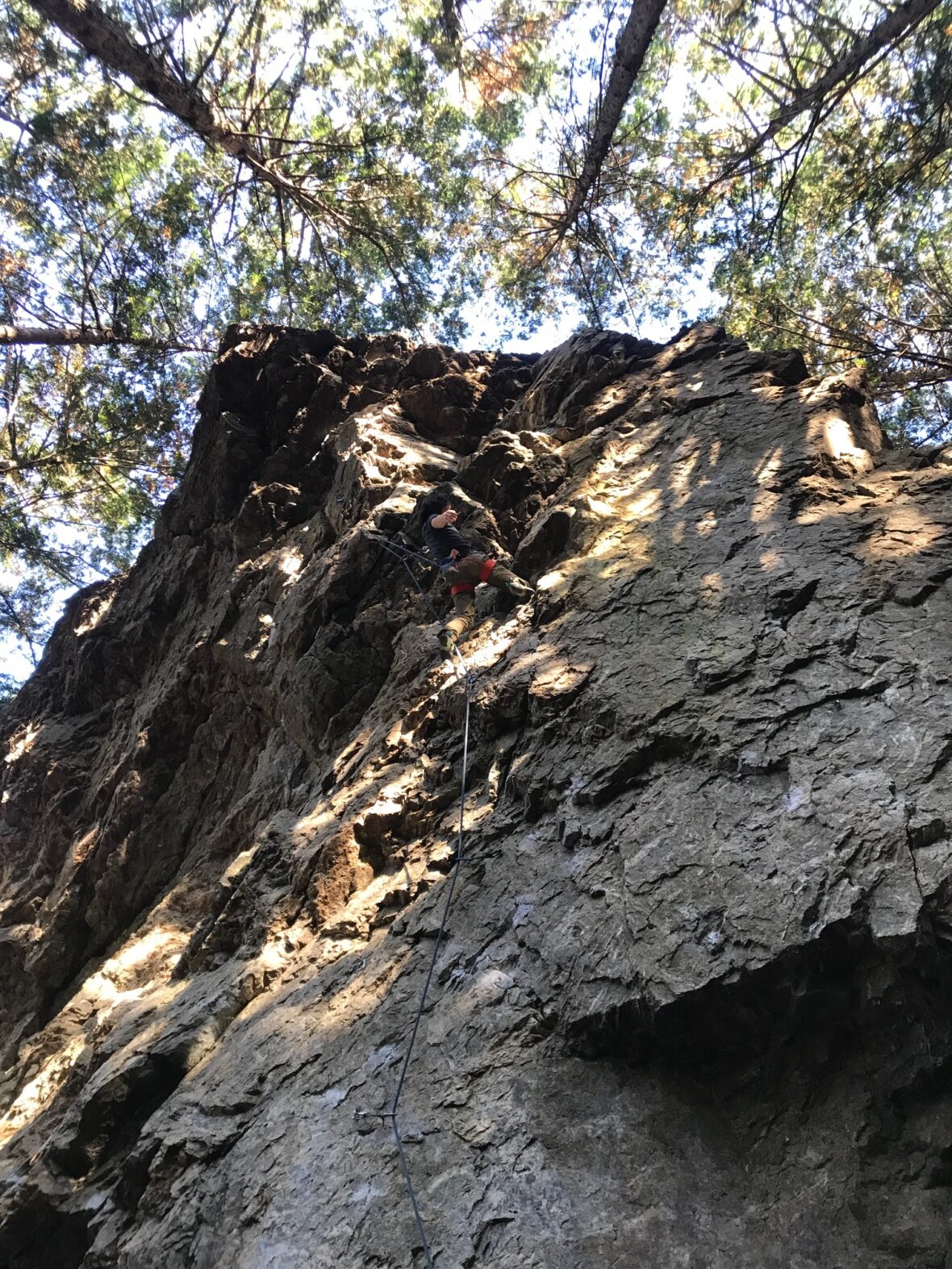
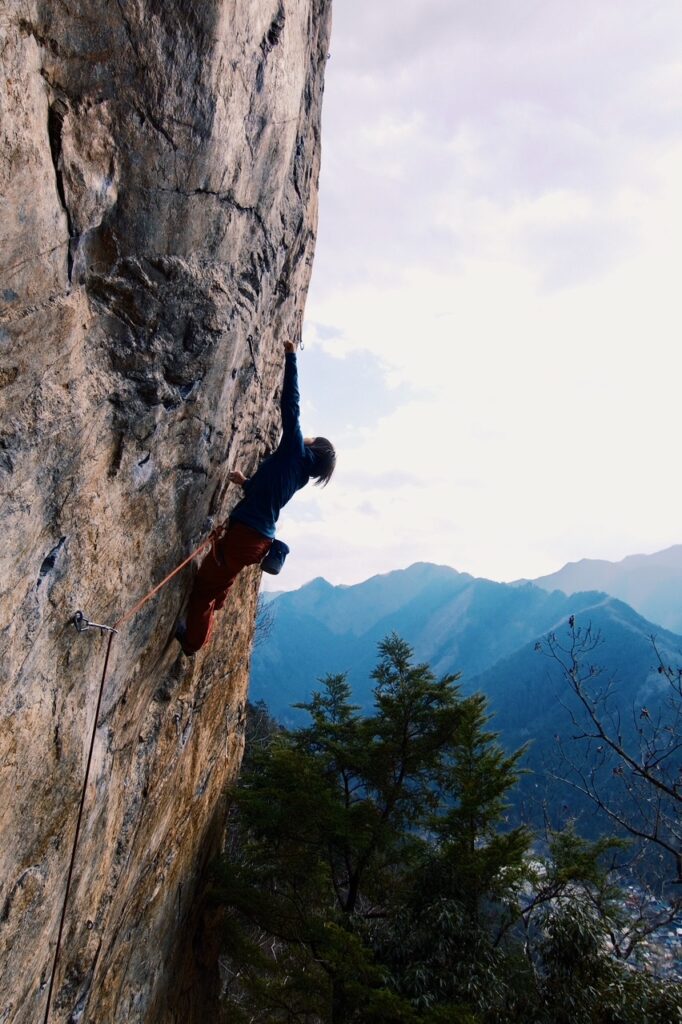
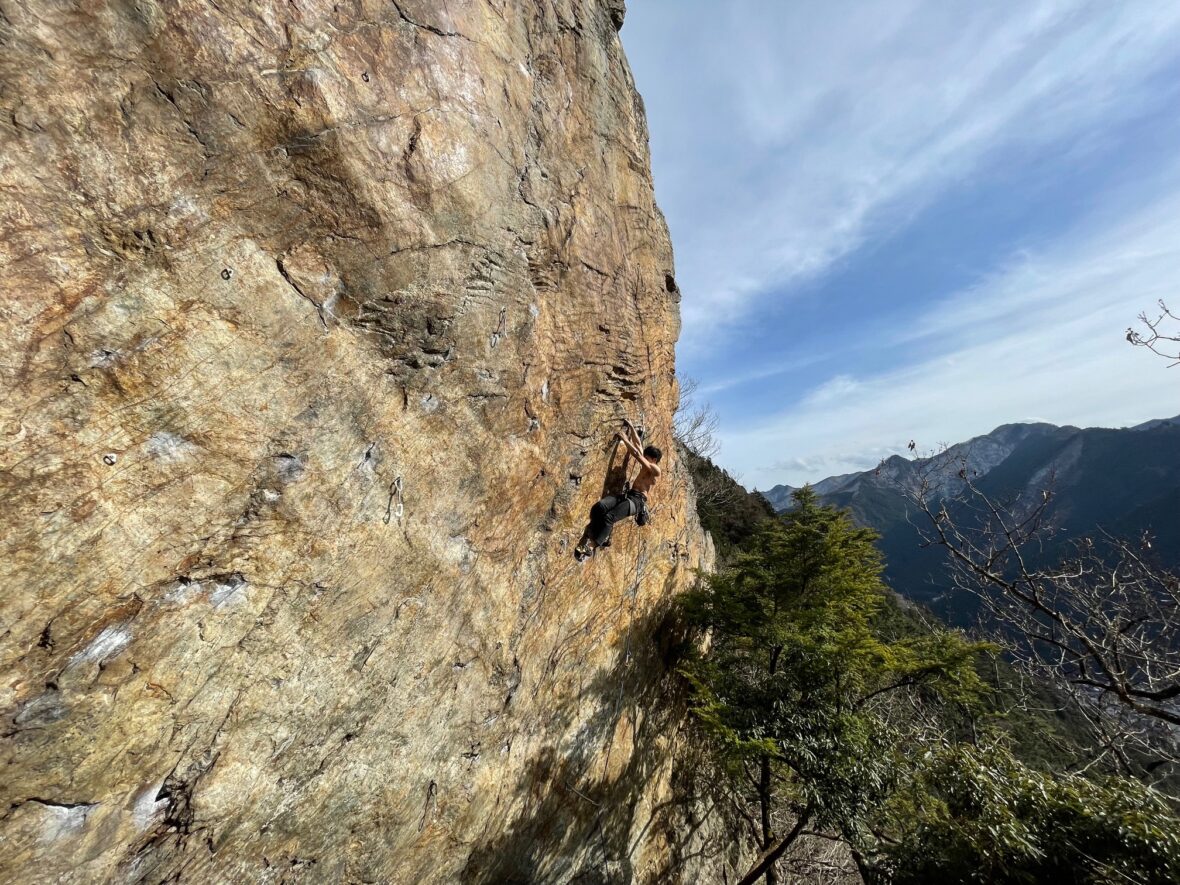
Overview: Hikawa Byobu Iwa is a rare winter climbing destination near Tokyo that can be reached entirely on foot from the station.
The approach involves a steep 45-minute hike, which actually makes a perfect warm-up on cold winter days.
The crag consists of several sectors, with Sector C being the main area where many of the classic routes are located. The belay area here is small but sunny, which adds to the comfortable winter atmosphere.
Other sectors offer a wider variety of climbing, featuring a range of 6a (5.10) routes and lines suitable for multi-pitch practice. This diversity makes the crag accessible and engaging for climbers of all levels.
⚠️ The rock can be fragile and some bolts are old, so climbers should exercise caution.
Fun Fact
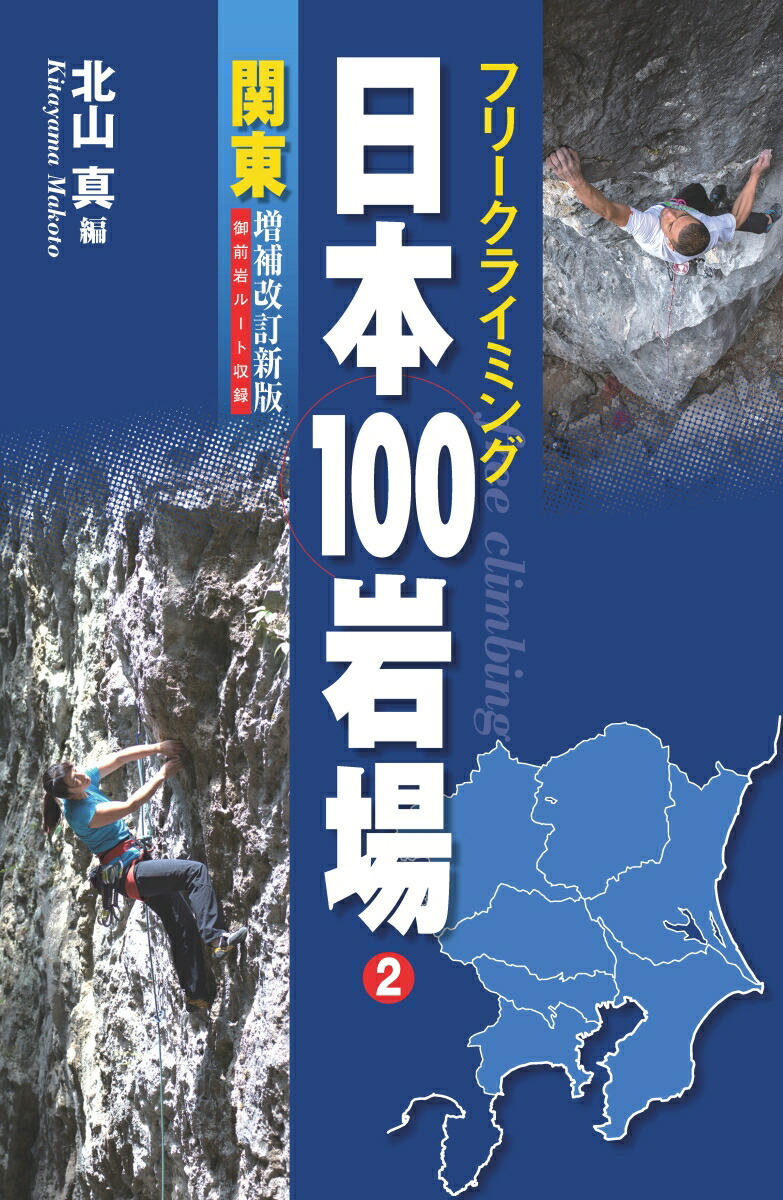
The route Ikuinoshishi is featured on the cover of the famous Japanese guidebook (Topo) 100 Iwa. The photogenic wall makes it easy to understand why.
For 6b+-7c+ (5.11–5.13) Climbers : Gozen-iwa (御前岩)
Location: Near Okutama Station + Bus to Osawa (12 min)
Approach: 10–15 min walk from the bus stop
Rock Type: Limestone
Number of Routes: 56 (mostly 6b+-7c+ / 5.11–5.13)
Best Season: Autumn to Spring (roughly October through May)
Recommended Routes: Heartbreak (6c+), Athlete Body (7c+)
Train/Bus Access from Shinjuku:
1.JR Chuo Line → Ome Station
2.Transfer to JR Ome Line → Okutama Station
3.Bus → Osawa Bus Stop (Bus Timetable)
Travel time: ~2.5 hours (All accessible with Suica/Pasmo)
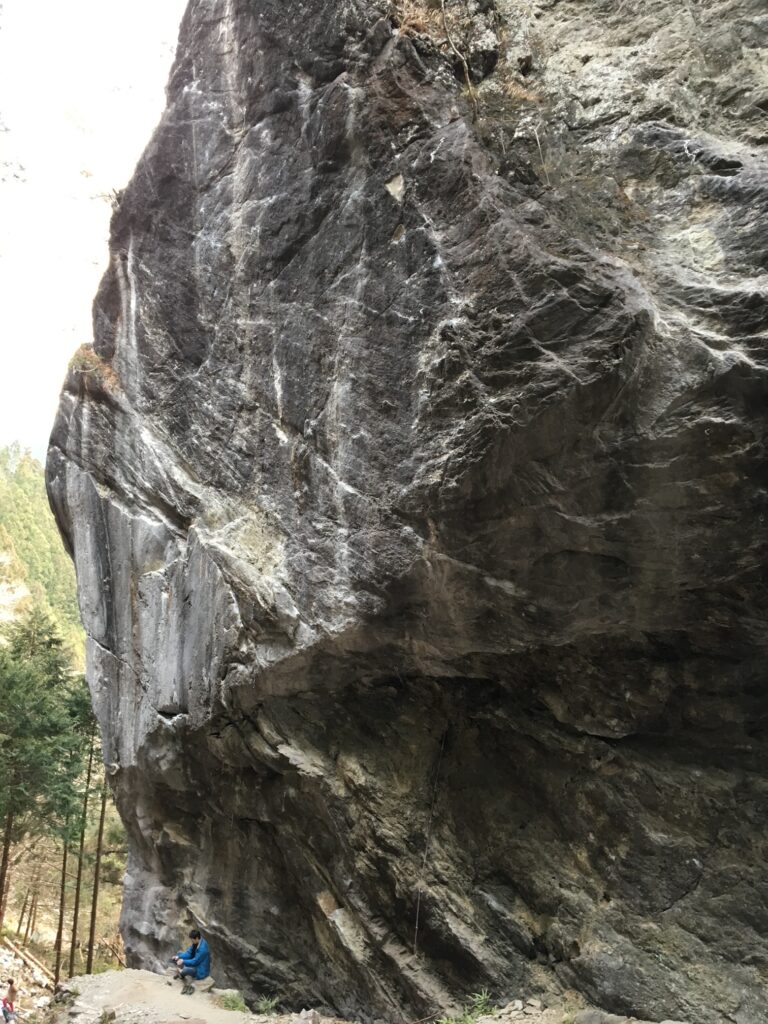
Overview: Gozen-iwa is one of the largest and most famous climbing areas in Okutama.
Due to past access issues with climbers, the area now has a self-imposed guideline: this area is reserved for climbers who can consistently climb 11s (higher 6b+).
The staging area is large and often filled with climbers. Although the north-facing wall can feel cold in winter, the staging area receives good sunlight, making it comfortable to wait between climbs.
New routes are still being developed, including hard projects in the 5.14 (8b+) range.
Fun Fact
It is one of the few areas in Japan using French grading, making it feel more friendly than other “stiff” Okutama crags. If your confidence is shaken, this is the place to restore your climbing spirit.

For 6c-7c+ (5.11–5.13) Climbers : Shirotae-bashi (白妙橋)
Location: Near Okutama Station + Bus to Shirotae-bashi (12 min)
Approach: 5 min walk from the bus stop
Rock Type: Limestone
Number of Routes: 70 (mostly 6c–7b / 5.11–5.12)
Best Season: Spring & Autumn(March–May, October–November)
Recommended Routes: Black Market (7a+ (12a)), Jungle Gym (7c (12d))
Train/Bus Access from Shinjuku:
1.JR Chuo Line → Ome Station
2.Transfer to JR Ome Line → Okutama Station
3.Bus → Shirotae-bashi Bus Stop (Bus timetable)
Travel time: ~2.5 hours (All accessible with Suica/Pasmo)

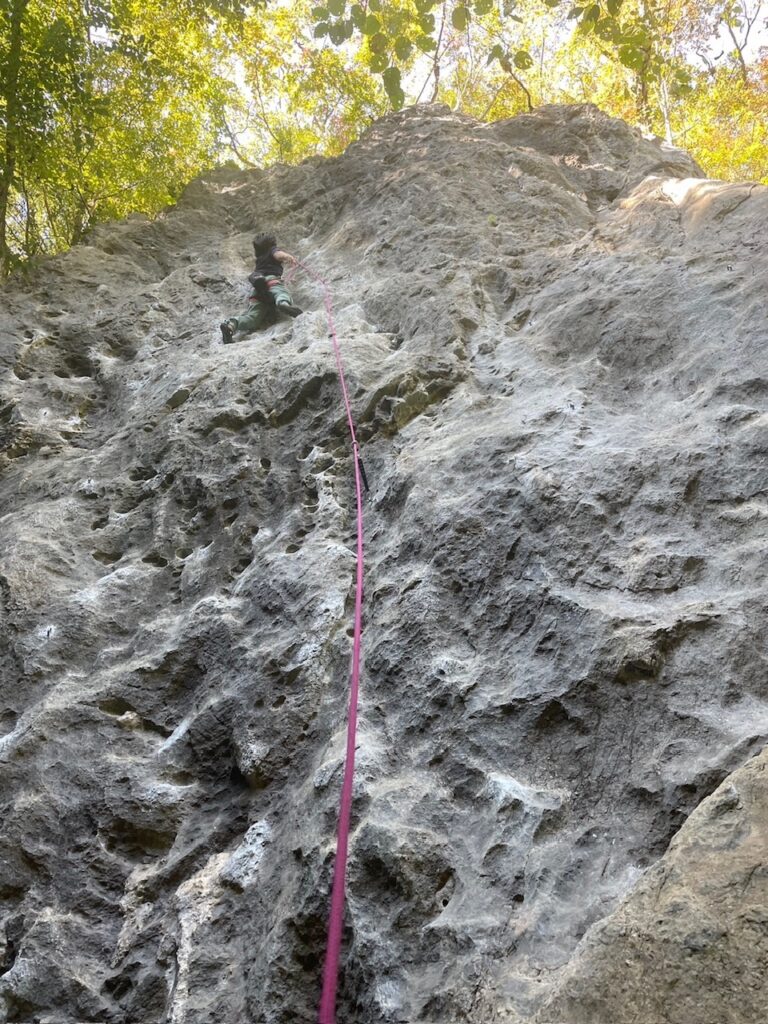
Overview: Shiratae-bashi is a compact crag but offers many quality routes in the 6c-7c+ (5.11–5.12) range.
The routes weave across the wall in complex patterns, and from the ground the route-finding can look confusing. However, once you start climbing, the sequences feel surprisingly natural.
Compared to nearby Gozen-iwa, this crag has a more serious, traditional Okutama atmosphere, with stiff grades and demanding climbing.
Local Tip
Seepage can be common here. Hard routes are often best attempted in winter, although temperatures can be very cold.
FAQ – Climbing in Okutama Without a Car
Q: Can I really reach Okutama crags without a car?
A: Yes. All the crags listed in this guide can be accessed from Shinjuku station using trains and local buses. Travel time is usually between 2 and 2.5 hours.
Q: Do I need a Japanese climbing permit or registration?
A: Most of the areas listed here are open-access, but they are maintained by local volunteers. Please be aware that access is a privilege, not a right. Always check the latest information on the JFA (Japan Free Climbing Association) website before you go. Some areas may be temporarily closed due to access issues with local residents, or recent rockfalls.
Specific rules for Gozen-iwa:
・Climbing Level: This area is strictly for experienced climbers who can solidly lead 5.11 (6b+) or higher.
・Registration & Fees: You are required to sign the register and pay the access fee (Entrance fee) at the designated location before entering the crag.
Q: Are there access rules I should know about?
A: Yes. Access ethics are strictly upheld in Japan. To ensure these crags remain open, please follow these basic rules:
・Keep noise low when passing through or near villages.
・Take all your trash home (leave no trace).
・Respect all local access restrictions and signage.
・Check local conditions: In addition to these general rules, each crag has specific guidelines (e.g., parking, seasonal closures, or restricted sectors). Always check the latest information on the JFA (Japan Free Climbing Association) website before you go.
Q: Are these crags bolted sport climbing areas?
A: Yes. All the crags listed here are bolted sport climbing areas.However, some routes have older bolts, so climbers should always check protection carefully and climb within their limits.
Q: What climbing grade should I be comfortable with?
A: Okutama is famous for being “stiff” (the grades are often much harder than in a typical indoor gym). To enjoy these areas safely, please note the following:
・Hikawa Byobu-iwa: The rock is fragile and requires careful gear management. However, it offers a wide variety of routes ranging from 6a (5.10) to 7c+ (5.13), making it enjoyable for a broad range of climbers.
・Gozen-iwa: Strictly for climbers leading 6b+ / 5.11 consistently. To respect local access agreements and avoid further issues at the crag, please refrain from visiting unless you meet this standard.
・Shirotae-bashi: Recommended for climbers leading at 7a / 5.12 or higher. This area is notoriously “sandbagged”.
topo for this area
Topo (climbing guidebook) for this area
Closing
In this article, I introduced several climbing areas in Okutama that can be reached by public transportation. In future posts, I will write detailed guides for each crag, including:
・approach descriptions
・recommended routes
・anchor information
・and local tips
If you’re planning to climb near Tokyo without a car, stay tuned!