
Tired of typical city sightseeing, shopping, and nightlife?
Looking for something deeper—Japan’s nature, culture, and local life?
Then Aso, with one of the world’s largest calderas, is an absolute must.
Aso is one of Japan’s most unique regions, shaped by an active volcano, vast grasslands, soothing hot springs, a 1,000-year-old fire culture, and incredibly rich local food traditions.
Each season shows a different face, and every visit feels unforgettable.
If you’re seeking real nature and culture in Japan, start your adventure here.
I’ll also link detailed trekking reports so you can plan your own route with confidence.
Contents
1. Overview
Aso (Aso City) is located in Kumamoto Prefecture, in the southern island of Kyushu.
It is home to Mount Aso, one of the world’s largest calderas and one of Japan’s most active volcanoes. Kumamoto is often called “The Land of Fire,” and Mount Aso is the reason why.
Nearby, you’ll find the Kuju Mountain Range, which includes Nakadake—the highest peak in mainland Kyushu. Together, these areas form Aso-Kuju National Park.
2.Why Aso Is Special
① Landscapes That Feel Like a Different Planet
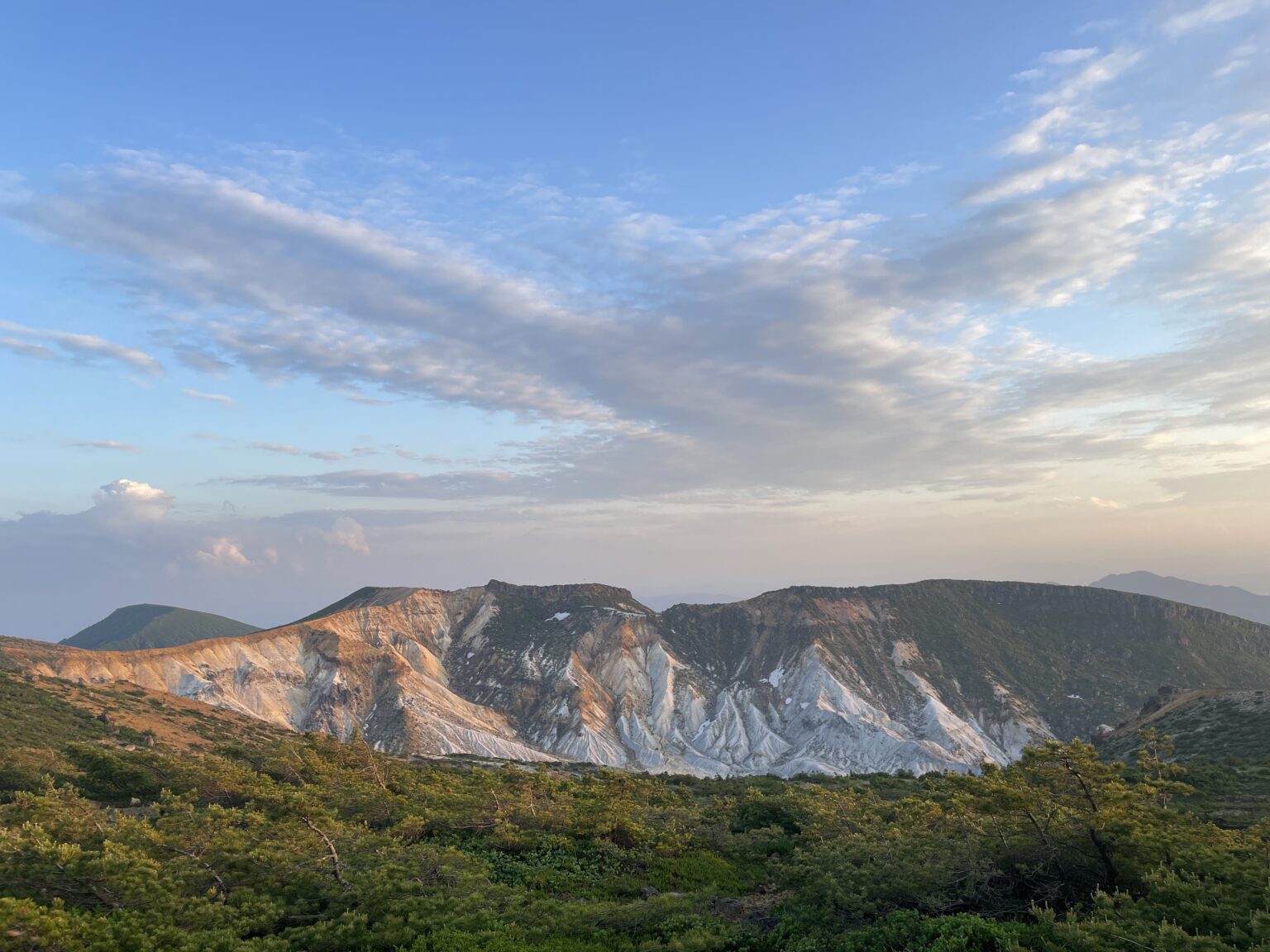
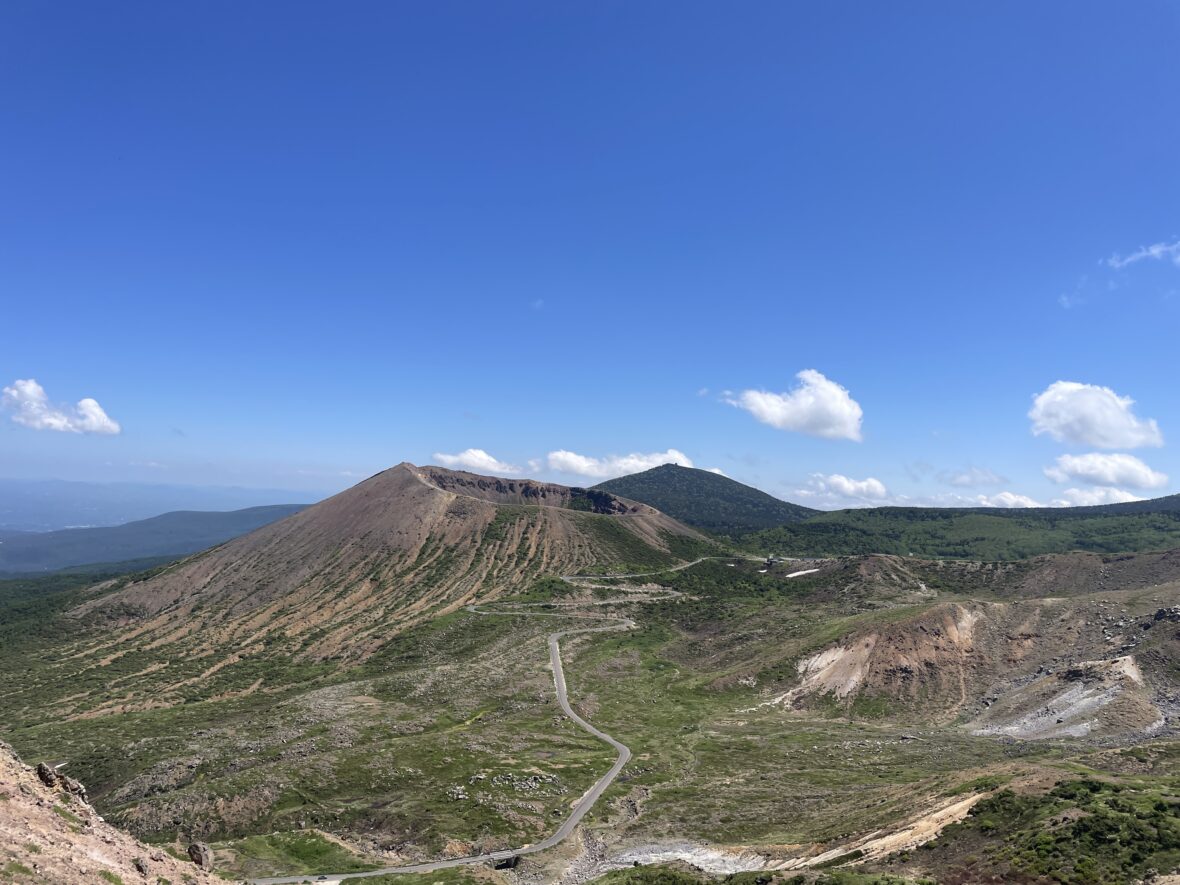
Aso’s five main peaks—Taka-dake, Naka-dake, Neko-dake, Eboshi-dake, and Kijima-dake—are collectively called the Aso Gogaku.
Naka-dake is still erupting today, making Aso not just a tourist site but also a center for volcano research.
Walking here feels unreal—black volcanic deserts, steaming vents, massive craters.
You can feel the Earth’s raw power up close.

② Peaceful, expansive grasslands
Aso’s other defining feature is its vast grasslands.
The open landscape—without tall trees—feels incredibly freeing.
And it’s calming to see the cows grazing and enjoying a slow, peaceful life. (Soft-serve ice cream made from local milk is a must!)

③ Onsen (Hot Springs!)
Hot springs are one of the greatest gifts of volcanoes, and Aso has plenty.
The most famous are Uchinomaki Onsen and Kurokawa Onsen.
Some places also offer private Onsen, so you might also want to check them out.
If you come to Aso, please take at least one day to experience the culture of Japanese hot springs.
3.Best Season
All seasons are beautiful—flowers in spring, green fields in summer, red leaves in autumn, snow in winter.
But the best time is April (about one month after controlled burning) to early November.
4.The Mountain of Aso (The Five Peaks)
“Aso” does not refer to a single mountain but to several peaks collectively known as the Five Peaks of Aso.
Nakadake: The most active crater, famous for its volcanic plume.
Takadake: The highest peak; often paired with Nakadake; incredible panoramic views.
Eboshidake: Best enjoyed with Kusasenrigahama; great views of the grassland below.
Kijimadake: 360° panorama; easy trail; family-friendly; offers crater-rim walking. Highly recommended!!
Nekodake: Jagged, rocky mountain; autumn colors are among the best in Kyushu.
5.Top Trails
①Nakadake – Takadake Trail
Distance: 14.9 km
Time: 6 hr 59 min
Difficulty: Intermediate
Highlight: Trekking right beside an active volcano. Otherworldly scenery.
Notes: Rocky sections; proper gear required; strong winds—bring warm layers.
Detailed trail report is Here.


② Kijimadake – Eboshidake Trail
Distance: 7.7 km
Time: 4 hr 08 min
Difficulty: Beginner
Highlight: Enjoy Aso’s vast grasslands with ease.
Notes: Gentle ups and downs; you can return early via Kusasenrigahama if tired.
Detailed trail report is Here.


6.Non-Hiking Highlights
• Kusasenrigahama
Vast grasslands + a pond + the smoking Nakadake crater + grazing cows and horses.
A must-see spot that never fails to soothe your soul.

• Sunasenrigahama
A black-sand plain formed from an old crater southeast of Nakadake.
Almost no vegetation—just volcanic ash. You’ll genuinely wonder, “Did I just land on Mars?”
• Higashi Crater Observatory
My top recommendation!
While the main crater viewpoint is popular, the east-side viewpoint offers far better, more dramatic views.
Beware of strong winds—you’ll feel like you might fly away (you won’t, but still!).

• Daikanbo
A stunning viewpoint on the north rim.
360° views and massive grasslands stretching across the caldera.

• Road to Laputa
A famous viewpoint along the Milk Road, severely damaged during the Kumamoto Earthquake.
Closed to vehicles now, but worth checking for potential future reopening.
7.Local Food to Try
・Basashi (Horse Sashimi)
Kumamoto is a famous for basashi- thinly sliced raw horse meat.
While it may sound unusual to some visitors, it has been enjoyed in this region for centuries.
If you’re curious about local food culture, this is one of the most iconic dishes.

・Karashi Renkon
Its lotus root is stuffed with spicy mustard miso and deep-fried, giving it a crunchy texture and a sharp kick.
It’s popular as a snack with drinks or a bento item.
It’s also a great opinion for vegan travelers, since it’s entirely plant-based.

• Sweet Soy Sauce (Kyushu-style)
Kyushu’s signature soy sauce contains added sugar or sweeteners.
Sweet-salty and addictive. Try it with local dishes!
• Chicken Sashimi
Raw chicken slices served with soy sauce, ginger, and garlic.
A Kyushu must-try—pairs perfectly with beer.

• Soft Serve Ice Cream
Aso has many dairy farms, meaning extremely fresh soft serve.
Top recommendations:
• Minamiaso Shizenha Soft
• Milkland Farm (my absolute favorite!)

8.Local Culture
• Noyaki (Controlled Grassland Burning)
From February to April, locals conduct controlled burns to maintain the grasslands—a tradition lasting over 1,000 years.
It’s dramatic and essential to the region’s ecosystem.
Note: The scenery looks barren right after the burn, so it’s best to visit about one month later.
• Onsen Culture
Hot springs created by volcanic activity.
Don’t miss Uchinomaki Onsen and Kurokawa Onsen.
Bathing culture is a huge part of Japanese life—Aso is the perfect place to try it.
• Cattle Grazing
From spring to autumn, cows and horses graze freely across Aso’s open plains.
This landscape is one of Aso’s defining symbols.
9.Where to Stay
• Kurokawa Onsen
A beautiful, secluded hot spring town known for its outdoor baths.
Recommended: Fujiya
• Uchinomaki Onsen
Great access to major attractions; hotels available if ryokan aren’t your style.
Recommended: Yunoyado Irifune
• Others (Budget-Friendly)
If hot spring towns are too pricey, stay at a hotel nearby and visit onsens just one day.
Recommended: HOTEL R9 The Yard Kikuchi
(Quiet, container-style rooms.)


10.Getting there
Airports
Closest: Aso Kumamoto Airport
Oita Airport is possible but it’s a bit far.
Car
Aso Airport → Kusasenrigahama: ~45 min
Oita Airport → Kusasenrigahama: ~2 hr30min
Train
Aso Airport → Aso Station: ~1 hr 10 min (transfer required)→Kusasenrigahama: ~25min
Oita Airport → Aso Station: ~3 hr (bus + train)→Kusasenrigahama: ~25min
Bus
Aso Airport → Aso Station: ~1 hr (Express Yamagiko Bus) →Kusasenrigahama: ~25min
Note: To get from Aso station to Kusasenrigahama, take the Aso Tozan Line bus. You can find the timetable here. If you’re traveling by car, you can drive directly to Kusasenrigahama.

11.Safety Tips
Volcanic activity may restrict access to crater areas.
Always check the latest updates: Link here
And there are no bears living in Kyusyu, so bear safety measures are not necessary.

I’ll be sharing more of Japan’s hidden trails and local mountain adventures, so stick around for the next one!